A giant wire fish with a ‘massive appetite for recycling’ is on a mission to teach the next generation about sustainability and clean up communities across South Africa.
South Africa (25 June 2026) – A giant fish, made out of wire, named Munch. That is what is grabbing the attention of young learners countrywide and encouraging them to reduce litter by separating recyclable waste at the source.
How exactly? By “feeding” recyclables to Munch, pupils help keep these materials in circulation within the recycling value chain.
Currently in its launch phase, Munch-on-the-Move is being rolled out in 11 schools across Cape Town, Durban and Gqeberha, with a total of 22 expected to be onboarded by early 2027.
This creative approach to reducing litter is the brainchild of the Sustainable Seas Trust (SST), a non-profit organisation that describes the Munch fish as a fun, eye-catching way to encourage learners to discard waste responsibly with the environment in mind.
“It’s a great visible reminder that protecting our marine life and addressing ocean pollution starts with managing our land-based sources of waste,” explained SST’s Operation Clean Spot (OCS) manager, Carla Kampman.
Pupils Are Taking Full Ownership of the Munch Recycling System
The data shows that this engaging approach is already driving measurable behavioural change.
Across several pilot schools, Kampman said daily litter accumulation had dropped from between 244 and 400 litter items per day during baseline surveys to fewer than 100 items per day after the interventions were implemented. In some cases, daily litter counts decreased by more than 75%, while litter weight reductions of over 50% were recorded at multiple sites.
Kampman said Munch was part of SST’s flagship OCS programme, which aims to implement systems-based waste solutions across Africa, the second-most polluted continent.
“What SST is testing in schools and communities is therefore not just locally relevant. It is foundational to understanding what effective behaviour change and waste recovery systems could look like at scale across the continent.”
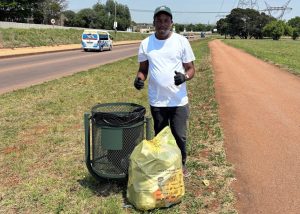
 An Overflowing Bin, a Passionate Activist, and a Lesson on Keeping Our Communities Clean
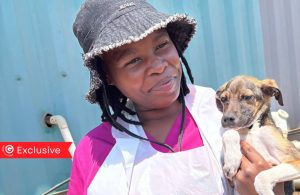
 For Her Birthday, This Dog Groomer Gave Shelter Dogs Pamper Sessions – and 3 Got Adopted!
When Munch arrived at schools, she said, pupils were first taught how to separate waste correctly. The different compartments make it easy to sort materials, and that waste is then collected and directed into the right recycling streams.
“What we’re really doing is building habits so that behaviour continues long after the programme moves on,” Kampman shared.
“Importantly, the impact extends far beyond the school grounds. Each new school introduced to the programme becomes a local hub for awareness, participation, and behaviour change, helping strengthen recycling practices within households and communities while reducing the likelihood of recyclable waste leaking into rivers and the ocean.”
Changing Minds and Cleaning Up Communities
The results so far have been promising. At Christmas Tinto Primary School in Strand, Cape Town, teacher Bolekwa Malangeni said Munch had already begun to have an impact on the wider community, with pupils educating their families about responsible waste management and getting their households involved in collecting recyclable materials.
“What is good about it is getting pupils involved, teaching them about recycling, the importance of recycling, and keeping our school clean, not just the school, but also outside it,” said Malangeni.
In Gqeberha, teacher Mihlali Pasiwe agreed that the project would help to address the problem of environmental waste at Fumisikoma Primary School, and also in the surrounding areas.
“Because we are surrounded by informal settlements, these residents don’t have access to municipal services. They don’t know where to dump their waste, so it ends up everywhere,” Pasiwe said.
“Even in the classroom context, if there are papers on the floor, you need to tell the pupils to pick them up. It doesn’t come naturally to them. This project will definitely educate them on how to deal with waste, and also benefit the community and help them understand.”
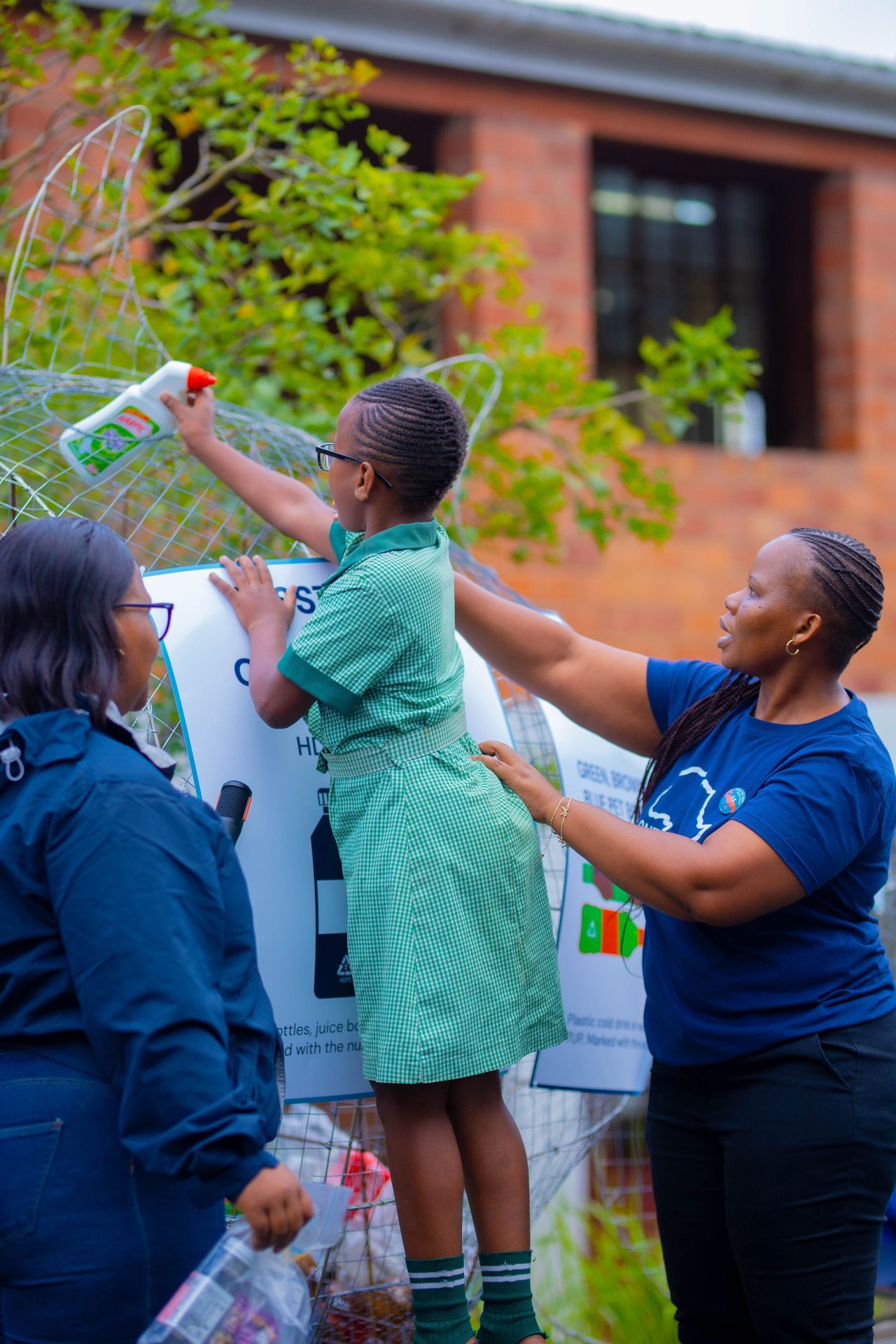
Participating schools have also been supported with training on how to use the free curriculum-aligned educational resources, along with the large wire mesh Munch sculpture, a recycling station and general waste bin for items not fed to Munch, as well as practical guidance on implementing recycling and awareness activities in ways that were locally appropriate and achievable.
“SST also helps connect schools with collection partners and recycling networks to ensure that recyclable materials are properly recovered and reintegrated into the circular economy.”
Kampman said the programme would focus on Grades 3 to 5 this year, and track the behaviour patterns in this group of learners until 2028, when the Grade 5 cohort would be in their final year of primary school.
She said one of the strongest findings from the pilot was that long-term environmental impact depended not only on awareness, but on strengthening the broader waste and recycling ecosystem around communities.
“Ultimately, what happens in a single school is part of something much larger. Each pupil who begins to see waste differently becomes part of a wider network of change, influencing households, strengthening community practices, and contributing to a broader shift in how waste is understood, valued, and managed across Africa.”
To support SST’s rollout of the Munch project, consider leaving a donation here. To find out more or get involved, schools, businesses, and parents can contact SST at [email protected].
Sources: Sustainable Seas Trust
Don’t ever miss the Good Things. Download the Good Things Guy App now on Apple or Google.
Do you have something to add to this story? Please share it in the comments or follow GoodThingsGuy on Facebook and Twitter to keep up to date with good news as it happens, or share your good news with us by clicking here or click the link below to listen to the Good Things Guy Podcast with Brent Lindeque – South Africa’s very own Good Things Guy. He’s on a mission to change what the world pays attention to, and he truly believes there’s good news around us. In the Good Things Guy podcast, you’ll meet these everyday heroes and hear their incredible stories:
Or catch an episode of Good Things with Brent Lindeque or our Weekly Top 5 below. The videos here are always changing, updated with the latest episodes from these two shows. Both are part of Good Things TV, created to bring South Africans balance at a time when the news can feel overwhelmingly negative. Our goal is simple: to remind you that there are still so many good things happening in our country – and to leave you feeling a little more proudly South African.
 by