A South African professor receives a slightly unusual honour! A newly identified species of seaweed now bears his name, recognising decades of his work in phycology.
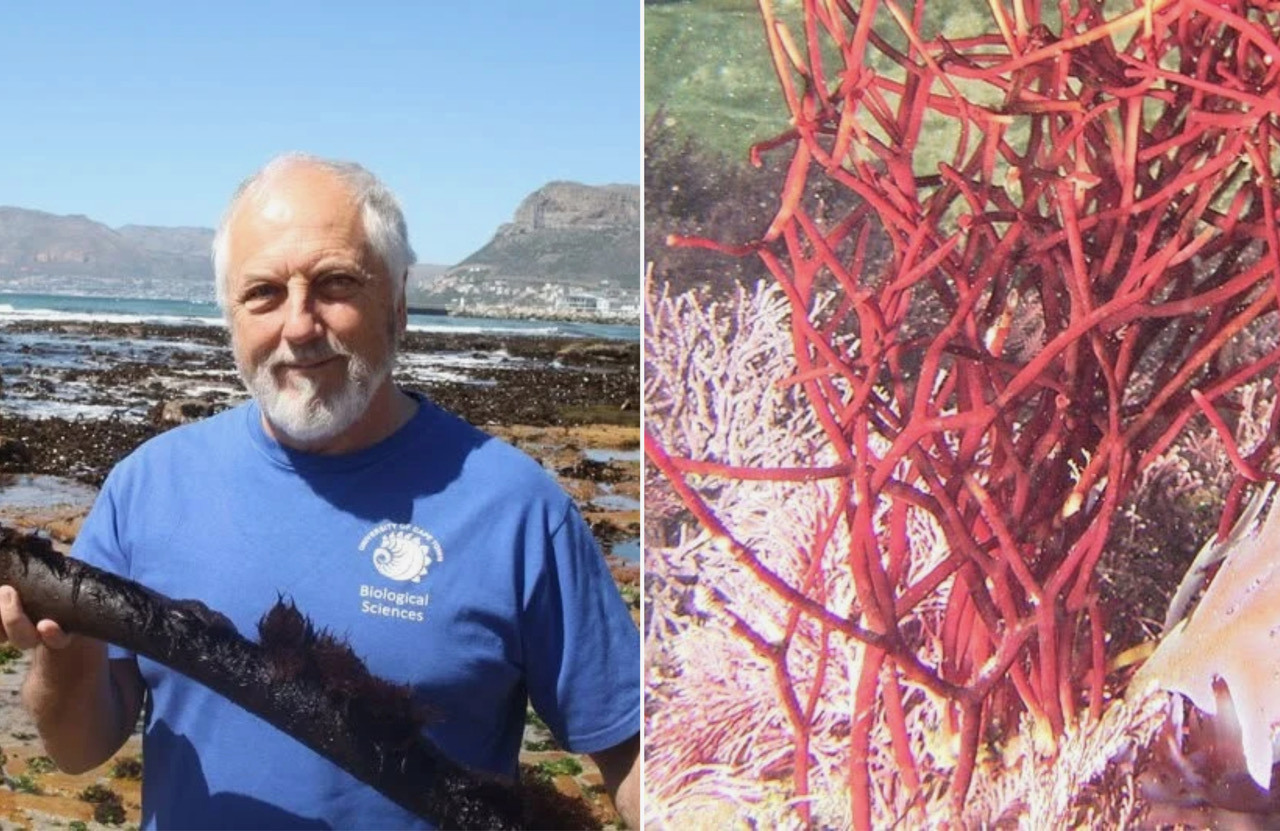
Cape Town, South Africa (12 October 2026) – The honour was bestowed on University of Cape Town (UCT) Emeritus Professor John Bolton after his longstanding contributions to seaweed research!
A species of red seaweed, found naturally in South Africa, has been named Mzanzia boltonii in honour of the professor, who has spent three decades studying our country’s seaweeds and helping develop the next generation of marine researchers.
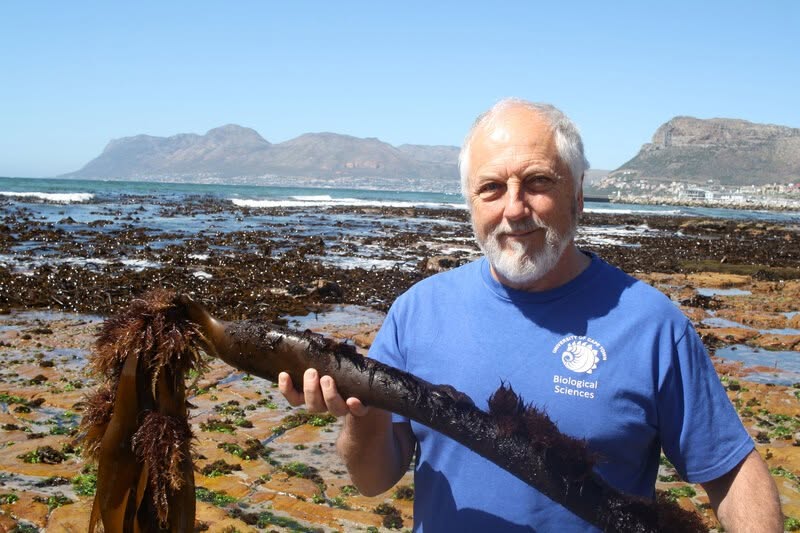
Bolton learned about the honour from Professor Olivier De Clerck of Ghent University in Belgium, a former UCT postdoctoral fellow and long-time research collaborator.
His reaction was priceless!
“Wow! I don’t know what to say. A beautiful name (the genus I mean). What a privilege.”
There’s some interesting science behind the discovery. In a major international study published in Molecular Phylogenetics and Evolution, scientists used genetic evidence to take a closer look at how certain red algae species are classified.
They discovered that South African seaweed previously identified as Prionitis filiformis actually belonged to a separate evolutionary lineage, UCT reports. The difference was significant enough for researchers to establish an entirely new genus, called Mzanzia.
The name comes from ‘uMzantsi’, an isiXhosa and isiZulu word meaning ‘south’, while boltonii is a tribute to the professor himself.
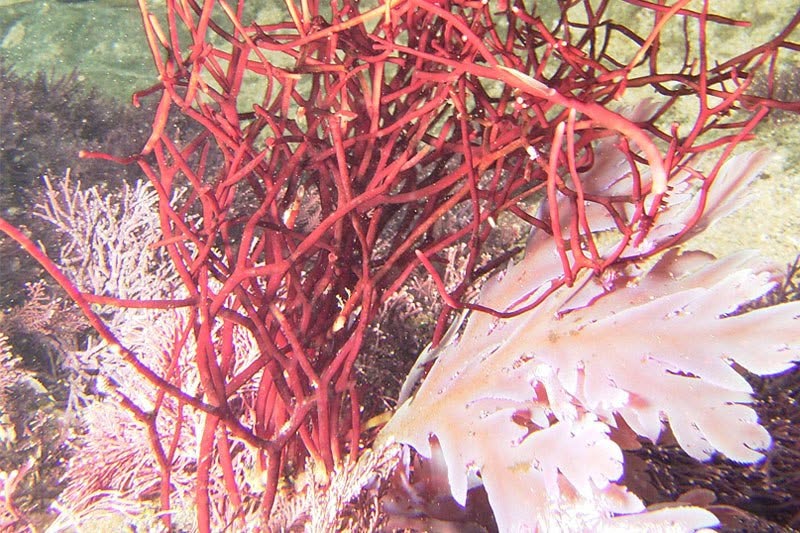
The newly recognised species is also endemic to South Africa, meaning it occurs naturally here.
Related Stories
 Meet Amber, the Newest 3-Flippered Turtle at the Turtle Conservation Centre
 Two Strangers Turn an Ordinary Market Trip into an Act of Heroism
Bolton’s special recognition comes after years of work that have helped expand scientific knowledge of our country’s marine biodiversity. In the late 1990s, he established a postgraduate exchange programme between UCT and Ghent University, opening opportunities for South African and Belgian scientists to work and learn together.
That partnership went on to produce two major research projects exploring seaweed diversity along South Africa’s east coast.
One of the most significant outcomes was an increase of more than 30% in the known seaweed diversity along the KwaZulu-Natal coastline, as researchers documented numerous species and new records for South Africa.
Their work also resulted in the publication of Guide to the Seaweeds of KwaZulu-Natal, which continues to serve as an important reference for marine scientists.
The partnership has also played an important role in developing researchers who have gone on to work internationally.
Among them are Professor De Clerck, the senior author of the latest study, Professor Frederik Leliaert, who is now scientific director of Belgium’s Meise Botanic Garden, and Dr Maggie Reddy, who previously lectured at UCT and Nelson Mandela University and now works at the University of Galway in Ireland.
All three have been involved in the UCT–Ghent research partnership over the years.
It was Dr Reddy who suggested the name Mzanzia, recognising the species’ South African roots!
A special honour for Professor Bolton, and another fascinating addition to what we know about the marine life found on our coastline.
 by
by