Award-winning storyteller N!hunkxa is helping preserve /Xam heritage through an innovative project that blends history, art and immersive technology.
South Africa (09 July 2026) – South Africa has a rich and diverse history, much of which cannot be found in books but is handed down through generations, through storytelling, poetry, song, dance, and folklore. It is this reality that inspired the Embassy of France in South Africa, Lesotho and Malawi and the French Institute of South Africa (IFAS) to launch Futures_Past: Amplifying Memory with Immersive Technologies project.
The initiative hopes to document local history and knowledge through the use of technology and art, giving South Africans an opportunity to source vital historical information. This has been implemented in partnership with Electric South and funded by the French Ministry for Europe and Foreign Affairs.
Running from July 2025 to March 2027, the project brings together talented artist teams to breathe new life into history through immersive digital storytelling. Working hand in hand with selected archives over eight months, the creatives will transform remarkable historical collections into interactive experiences using virtual and augmented reality, spatial audio and engaging installations. The finished works will then travel to audiences across South Africa, Lesotho and Malawi, where they will be showcased in a series of exhibitions from September to December 2026, inviting visitors to step inside the stories that have shaped each region.
We have had the pleasure to speak to Indigene Corefio Harris (N!hunkxa), who has not only actively been archiving history through the “We Are What Remains” project at the !Khwa ttu San and Culture Centre archive in Yzerfontein, but was recently included in the artist–archive driven initiative for the Futures_Past project.
N!hunkxa is an international multi-award-winning director, producer, author, healer, activist, mother, and poet. She is the founding director of |Kx’am, a company that researches, restores, creates, and promotes /Xam (San) knowledge systems, art, culture, heritage, healing modalities, and ways of being, with the use of new media.
Speaking to what drew her to both projects, N!hunkxa shares that there were several reasons.
“Firstly, the /Xam are often overlooked, and so I was intrigued that a project of this scale was seeking to highlight the history of such deeply marginalised people.
The opportunity seemed perfectly aligned with the work my company already undertakes – utilising new media to preserve, create, and promote /Xam heritage.
I was drawn to the work by my desire to meet the artists of the linocuts. Meeting “The Ancients” always fills me with awe and delight; it is like time travel, getting up close and personal with people who are carriers of a profound wisdom that has survived centuries of suppression or oppression. The hope is always that some of their magic will rub off on me.”
 Table Mountain Venue Snags Another World-Class Win for South Africa!
 Vusa Launches Upgraded DigiBus to Boost Digital Learning for Langa Schoolchildren
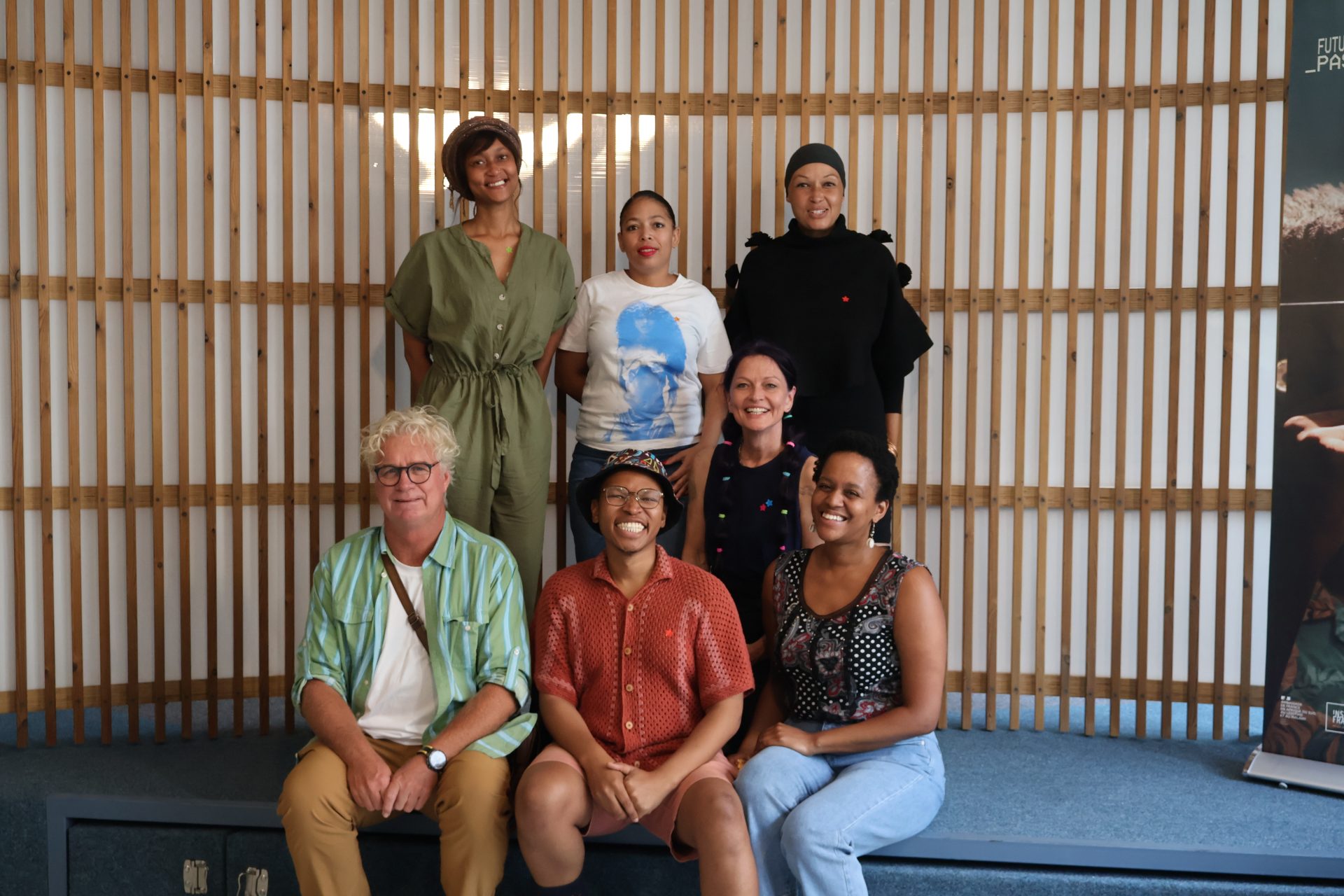
The team working alongside N!hunkxa was made up of Faye Victoria Katiiti Khakasa Kabali-Kagwa, Inka Kendzia, Thando Mthembu and Xabiso Vili.
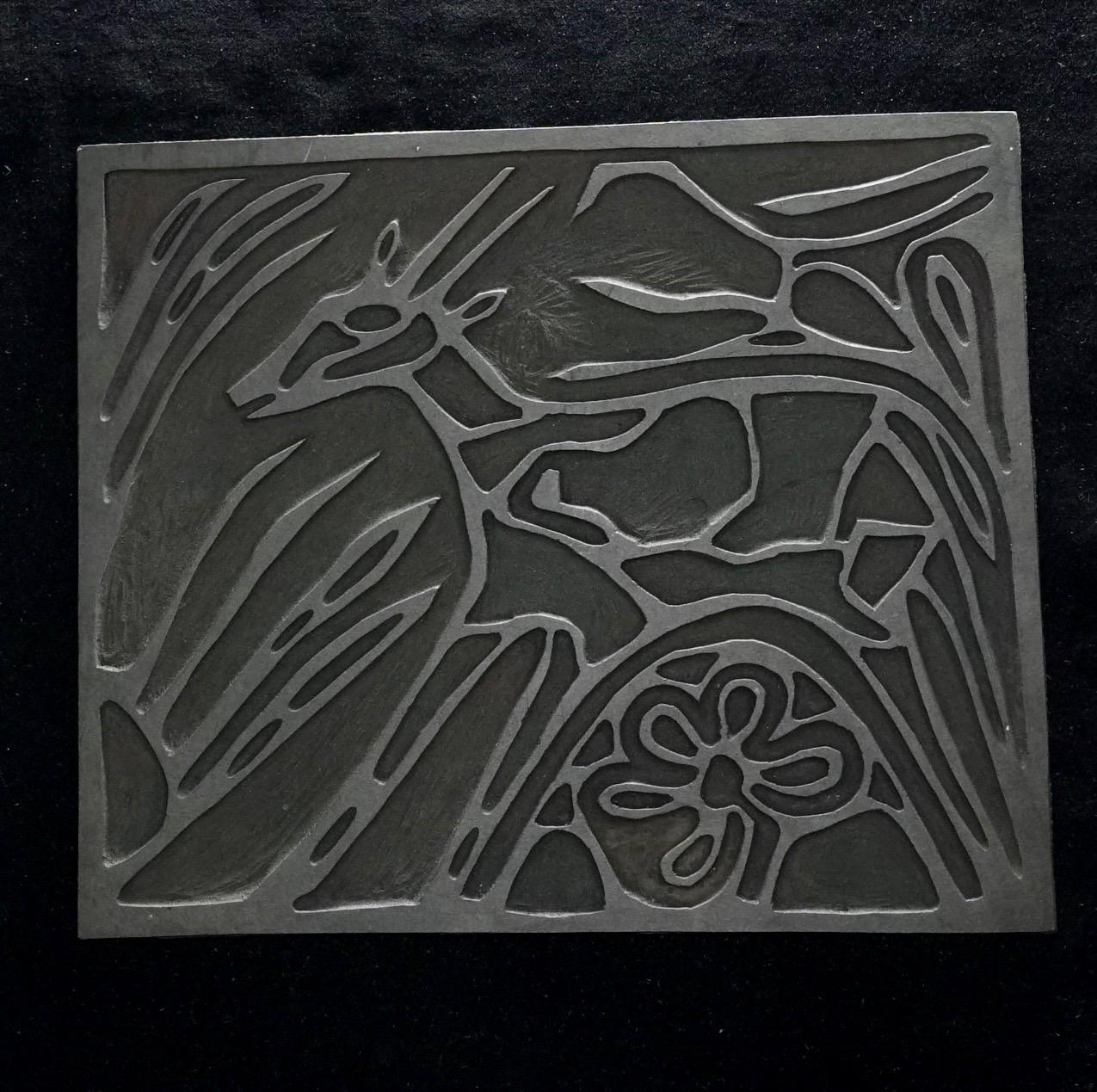
!Khwa ttu holds nearly 1,000 linocuts by /Xam and Khwe artists affected by displacement linked to the South African Border War. The creative team has worked with the collection and with community members to explore ways of bringing these linocuts into an immersive, multi-sensory spatial experience.
“I was also excited to work with our creative team – an assembly of individuals with such a wealth of skill and experience. I was totally geeked, lol!”
For N!hunkxa, this project was an important one to pull together as the only /Xam member on the team. Knowing first-hand the struggles of the /Xam people, even today in modern times, her hope was to see this project truly acknowledge the /Xam people and their history.
“I am painfully aware of the erasure that San/First Nation have faced historically, and continue to face to the present day, as a result of colonisation and apartheid. There is this fetishisation and tokenisation of /Xam people in the country. This is why our language and people are on the South African coat of arms and printed on all the money, but there is no significant recognition of /Xam existence or acknowledgement of our human rights.
Examples of this is how we are excluded from land restitution in the country as a result of the 1913 cut-off date of the Land Rights Act, how none of our languages are included in any of the multitude of the country’s official languages, but more importantly how /Xam are still being forced to identify as “coloured” under Black Economic Empowerment policy – which is at once a complete obliteration of First Nation identity, history, culture, languages, and heritage. I was really worried about being the /Xam token on the team and having the work we would undertake not be reflective of First Nations ways of knowing and of being.”
This archive project is doing more than just preserving history, but it creates an experience. N!hunkxa’s input has been invaluable. Speaking to the distinction of preserved history versus experienced history, she shares how it can change how we interact in the everyday setting, too.
“This distinction is important because preserved histories are not necessarily interacted with. And when histories are not known or interacted with, we become unaware of how we may be perpetuating injustices, intentionally or unintentionally, in the everyday.”
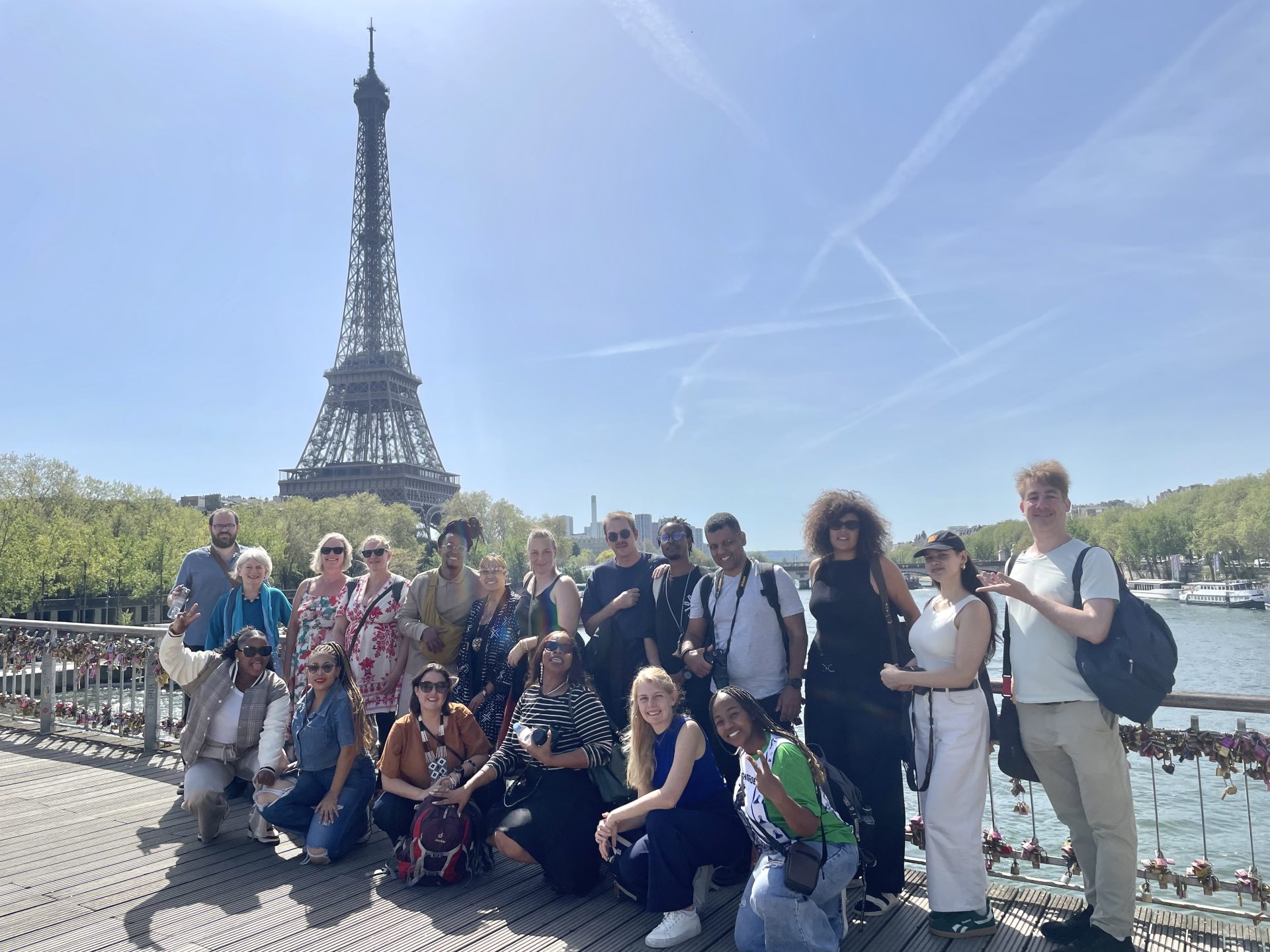
N!hunkxa was invited to join representatives in France as part of the project, visiting museums that have displayed French/African history, with specific highlights on the slave trade. During this trip, she noted how some of the displays were deeply problematic in not addressing the human rights violations of the time. While she may not have gotten the responses that would see real change in how history is shared there, she came home having learned just how important it is to interrogate history and to ensure that facts are presented as such.
“My hope is that this project invites the audience to engage with the people, their heritage, history, and potential futures”
The use of technology has been a big part of this project, giving the artists a creative way to share the rich history of the /Xam people.
“Immersive technologies allow for the audience to be collectively submerged in experiences, which reflect San communal rituals and ceremonies. San rock art stands as a testament to our heritage of utilising visual language as a means of expression, which is complemented in our exhibitions’ use of projection, a tactile wall, sculpture and linocuts.
San oral storytelling is also echoed in our use of the artist voices in the work. Their lived experiences are also conveyed in the selection of linocuts in the exhibition that speak of their narrative during the historical period during which the linocuts were made.
Sound, frequency, and song also play a strong role in permeating through and holding the exhibition, which are central to San culture. Immersive technology allows us to play with San culture and reinterpret it in the work we are creating.”
Having worked alongside some of the community to bring this project to life, N!hunkxa noted just how complex the issues have been for the /Xam, how diluted their history, beliefs and spirituality have become over time, and just how much is set to be lost.
“One of the community members told me the story of “/’au de”, literally translated to “fish woman”, which is about their mermaids. A profound sadness rippled through me at the thought of these languages, histories, cultures, healing modalities, and ways of experiencing reality, being lost with every frail and dying elders.
What stood out most, though, was the eternal joy, lightness of being, dance, vitality, song, and laughter that the community still emanates. This was humbling to experience, given their traumatic history. Meeting them was inspiring.”
For those who don’t know much about the /Xam people, we asked what N!hunkxa hopes people walk away with. Her answer was truly hopeful, not just for those who have the opportunity to see the exhibit, but for the human race as a whole.
“The San have the oldest genetic material on the planet. The story of the San is the story of human origin. Where colonial epistemologies emphasise disembodied rationality, individualism, and control, San epistemologies prioritise embodiment (rhythm, dance, trance, initiation rites, vibration), community (Ubuntu: I am because we are), spirituality (the visible and invisible are intertwined), ancestry (with ancestors who guide and protect, with rituals and offerings maintaining dialogue between realms), dream (legitimate sources of truth, prophecy and healing), intuition (form of intelligence that complements sensory perception and rational analysis), oral transmission (myths, proverbs, songs, poetry) and ecology (humans are situated within ecosystems, land and cosmology.
Knowledge is cyclic, seasonal and attuned to planetary and spiritual alignments. Knowledge is lived, relational, and sacred, inseparable from the rhythms of land, body and spirit. Knowledge is not compartmentalised into “science” or “art”. It is integrated. Healing, agriculture, spirituality and politics are understood as parts of the same fabric. Knowing is living: it is about sustaining life, harmony, and balance.
In a world riddled with political instability, war, xenophobic attacks, gender-based violence, poverty, and environmental degradation, these San epistemologies that emphasise holistic living, balance and harmony are ways I wish the human race could learn from and adopt – to ensure the survival of our species.”
The /Xam way of life is one that embraces balance; there is much society can learn from its history. And there is hope that in honouring that history, they can start to recoup what has been lost.
“I would hope that the audience is inspired by the artist’s resilience, and touched by the joy that has remained, despite it all.”
This interview is part of a special partnership between the Embassy of France in South Africa, Lesotho and Malawi, the French Institute of South Africa (IFAS) and Good Things Guy, celebrating 30 years of cultural co-creation. Since 1995, IFAS, the cultural agency of the Embassy of France in South Africa, Lesotho and Malawi, has supported artistic and creative exchange across disciplines from visual arts to gaming.
To mark its 30th anniversary in 2025, IFAS and Good Things Guy are sharing the stories of South African creatives whose journeys have been shaped by French–South African cooperation, highlighting three decades of connection, creativity, and shared achievement. You can read them all here.

 by
by