New transplant technologies are opening doors that once seemed impossible, giving more South Africans access to life-saving procedures. But despite remarkable medical advances, one challenge continues to stand in the way: too few organ donors.
Johannesburg, South Africa (03 August 2026) – Every breakthrough in medicine begins with a moment of hope. Every transplant begins with a person saying yes. While surgeons continue to achieve extraordinary medical milestones, the greatest life-saving advancement available to South Africans today isn’t found in an operating theatre… it’s found around a dinner table, in a conversation that could one day save someone else’s life.
This August, recognised as National Organ and Tissue Donation Awareness Month, or “Orgust“, South Africa is celebrating remarkable progress in transplant medicine while confronting a challenge that has remained stubbornly unchanged for decades. Despite world-class expertise and pioneering technology, the country continues to have one of the lowest organ donation rates in the world.
Few people understand both sides of that story better than Mohamed Zayd Khota.
When Mohamed Zayd was just one year and nine months old, kidney failure changed every part of his childhood. His days revolved around sixteen hours of overnight dialysis, 21 different medications, weekly injections and constant medical care from his mother, who became his full-time nurse. Going to school, playing sport or even enjoying a simple glass of water came with difficult decisions and strict limitations.
After waiting five long years for a transplant, everything changed in July 2025.
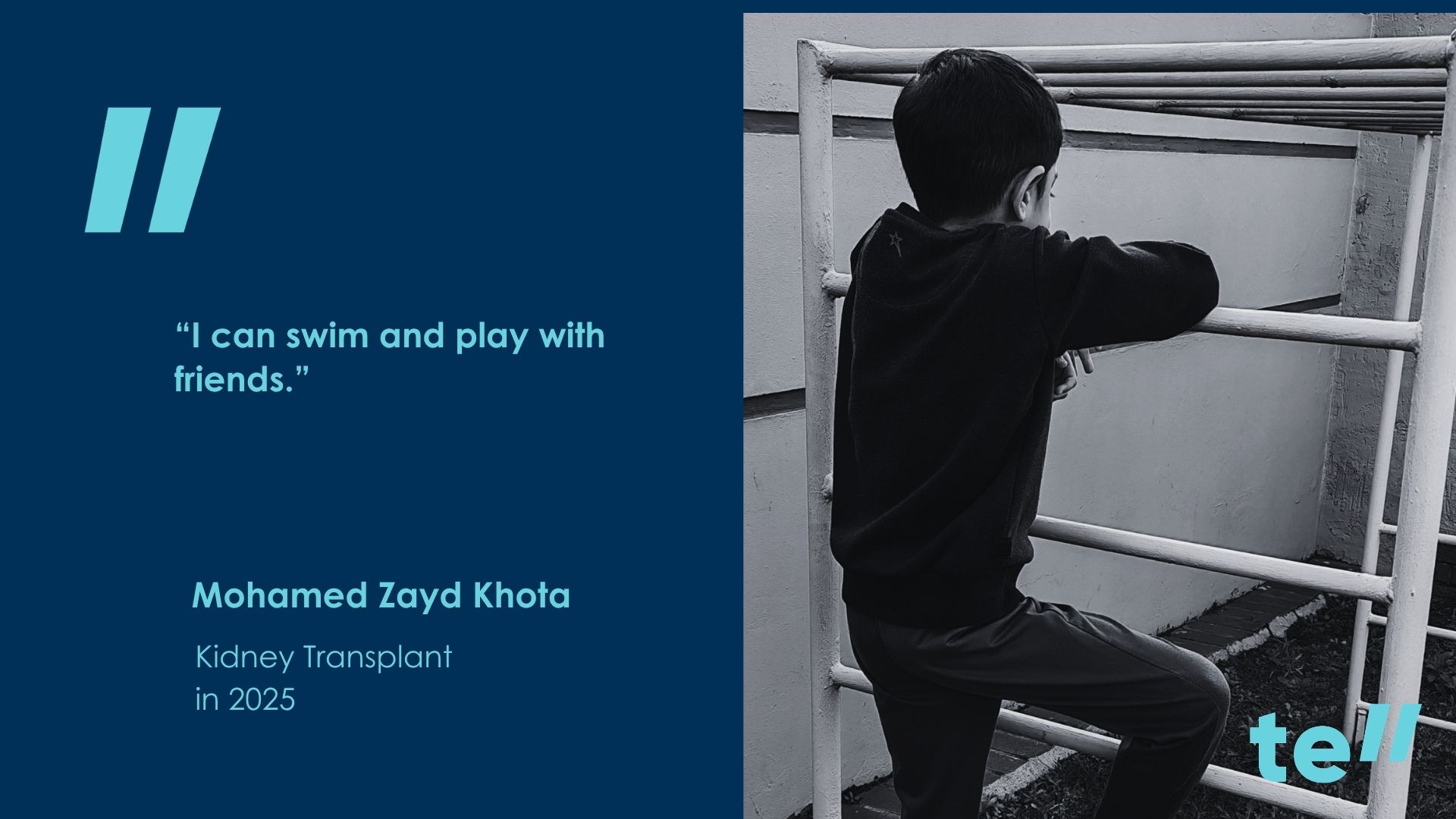
At the age of eight, Mohamed Zayd received a kidney from a living donor. Today, he is back at school, enjoys swimming, goes on family holidays and embraces the ordinary moments many children take for granted.
He describes the transplant as “a wonderful gift” and sums up its impact in one word: “transformative.”
His story is made possible by decades of medical innovation. The first successful kidney transplant took place in 1954, during a time when doctors had very limited ways to prevent organ rejection. Today, survival rates have improved dramatically across every transplant field. Worldwide, transplantation is estimated to have added more than two million life-years over the past 25 years.
South Africa continues to contribute to that progress. Over the past few years, transplant teams have expanded opportunities that would have seemed impossible only a decade ago. Surgeons are now successfully transplanting kidneys and livers across blood group barriers that once automatically ruled out potential donors. Kidney exchange programmes allow incompatible donor-recipient pairs to be matched with others, giving patients another pathway to a life-saving transplant.
Related Stories
 Saturday Wrap Up: Finding the Good During a Difficult Week
 Herman High Learners Help Turn Hermanus Pink for Pauline!
In June 2026, another remarkable milestone was reached when a South African transplant unit introduced Africa’s first liver perfusion machine. The technology keeps a donor liver functioning outside the body, allowing surgeons to assess and even improve the organ before transplantation. In certain cases, it also makes it possible for one donor liver to be divided between both a child and an adult, extending the gift of life even further.
“We are living in an era where transplantation is achieving things that would have seemed impossible just a decade ago,” says TELL co-founder and double lung transplant recipient Fawn Kruger.
“South African patients now have access to world-class transplant expertise and innovative treatments that are expanding opportunities for transplantation. But every breakthrough still depends on the generosity of donors and their families.”

That generosity remains the missing piece.
One organ donor can save up to 7 lives, while tissue donation from that same donor can improve the lives of as many as 70 more people. Yet South Africa records fewer than 1.4 deceased organ donors per million people, placing it among the lowest donor rates globally. For thousands of South Africans currently waiting for a transplant, including many children, those numbers represent years spent hoping for a phone call that may never come. Patients with blood group O, for example, wait an average of 12 to 15 years for a kidney transplant, and many sadly do not survive long enough to receive one.
The contrast is striking for a country that made history in 1967 by performing the world’s first human heart transplant.
Technology is no longer the greatest obstacle.
“A machine can’t fix a system that doesn’t refer potential donors in time, or a family that’s never had the conversation, or a myth that stops someone from saying yes,” says Stella de Kock, Managing Director of TELL, who has herself been waiting for a kidney transplant for 14 years. “This Orgust, we’re asking South Africa to address all of it, starting with the conversation every family can have today.”
That conversation matters. Ultimately, the decision rests with family members after someone has passed away. If loved ones don’t know a person’s wishes, they cannot honour them with confidence. Misunderstandings, uncertainty and long-standing myths often prevent donations that could have transformed multiple lives.
That is why TELL (Transplant Education for Living Legacies) is encouraging every South African to have that conversation now, long before it is ever needed.
As Mohamed Zayd so simply puts it: “We need to educate our youth on this important issue, so that we have more donors.”
 by
by