Would you swap your go-to herbs and spices for indigenous alternatives if it meant a healthier and more secure food future?
South Africa (17 October 2025) – When we talk about food security, most of us think about whether there’s enough food to go around. But it’s also about what food is on our plates, and how we can protect the biodiversity of indigenous crops that are quietly disappearing from our diets.
To put it into perspective, out of almost 400,000 plant species growing on this planet, just six account for more than half of all crops produced globally. Only six.
Those are the big, uniform staples we find all around the world, like sugar cane, maize, rice, and wheat.
Even though they’re available almost everywhere, those staples alone don’t give us the variety or nutrition our bodies need, and they push out indigenous crops that are actually packed with nutrients and grow better in local climates.
Global agriculture has already lost around 75% of its crop genetic diversity as farmers switch to higher-yielding but uniform crops.
Dr Hennie Fisher from the University of Pretoria’s (UP) Department of Consumer and Food Science says that change is needed to protect food security. That change may be a move towards including more indigenous crops on the plate.
“With about 3.2 billion people worldwide unable to afford a healthy diet and 900 million people experiencing severe food insecurity, we need to move away from diets that contain higher proportions of cheaper, nutrient-poor, highly processed foods, and embrace the value of indigenous crops.”
The stats on diet-related deaths in SA are sobering, but they make a point for it, too. According to Stats SA, South Africa alone saw deaths related to obesity, diabetes and hypertension increase by 58,7% over 20 years, from 1997-2018.
“By eating a wider variety of plant species and diversifying our diets, we can build resilience into the food system while improving health outcomes for consumers,” says Richard Hay, curator of the Future Africa Institute’s Indigenous and Orphan Crops Collection.
 The Hope Dealers: Jozi Trails Looks After the City's Longest Green Artery
 Banjo's Best Life! Scruffy Pup Found in Bushes Gets Happiest New Beginning
So, could we put more diversity back on our plates? Students at UP have already been testing it.
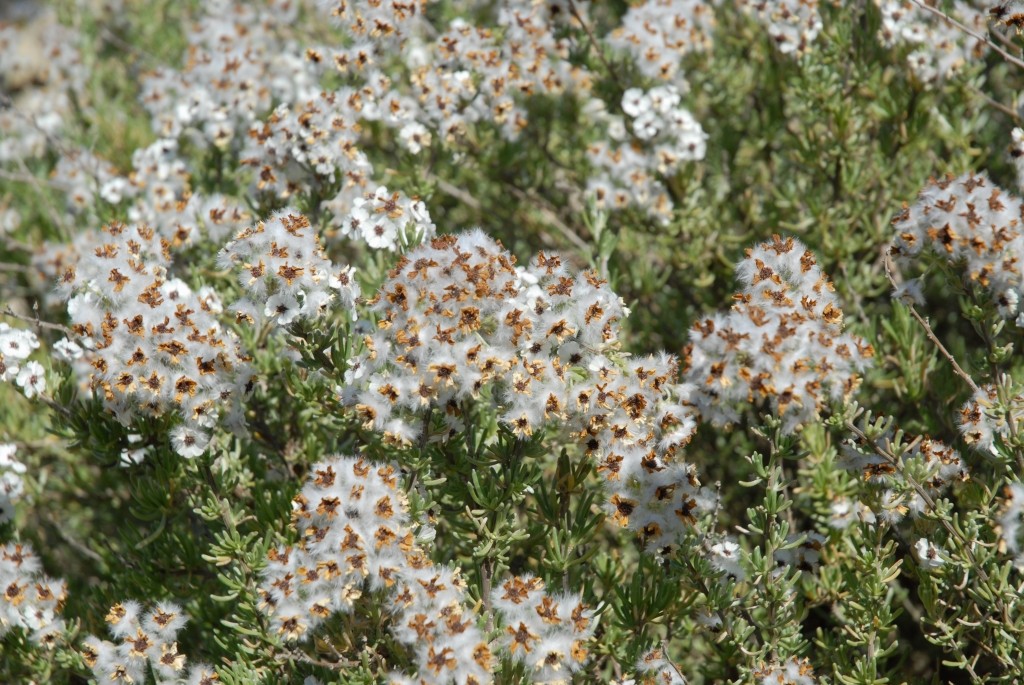
Recently, a class of 38 Consumer and Culinary Science students were asked to cook with both common commercial herbs and their indigenous counterparts that share similar flavour profiles to determine if they would make suitable alternatives. Surprisingly, African wild rosemary (Eriocephalus africanus) and golden sage (Salvia aurea) are viable alternatives to common rosemary and sage.
“Our work focuses on combating global dietary homogenisation by screening consumer acceptance of underutilised plant species among young consumers, and determining if exposure to novel plant species through the teaching and learning environment is likely to alter future cooking behaviours,” Dr Fisher explains.
This work is a glimmer of hope. Real change could be possible by reintroducing indigenous and nutritious plants back into kitchens and communities.
 by
by