Hundreds of African children’s books are coming to life in SASL, giving Deaf children the chance to experience stories in their own language from an early age!
Stellenbosch, South Africa (04 February 2026) – A partnership between Stellenbosch University and Book Dash is making a positive impact on how Deaf children across South Africa access stories.
Together with Stellenbosch University’s curriculum material development project, Handlab, the team is translating and recording Book Dash’s full library of children’s picture books (more than 200 African stories) into South African Sign Language (SASL).
“The translation of the full Book Dash library into SASL is a milestone because it tackles one of the most persistent barriers facing Deaf children: access to early language and literacy,” says Vanessa Reyneke, Handlab’s Project Coordinator.
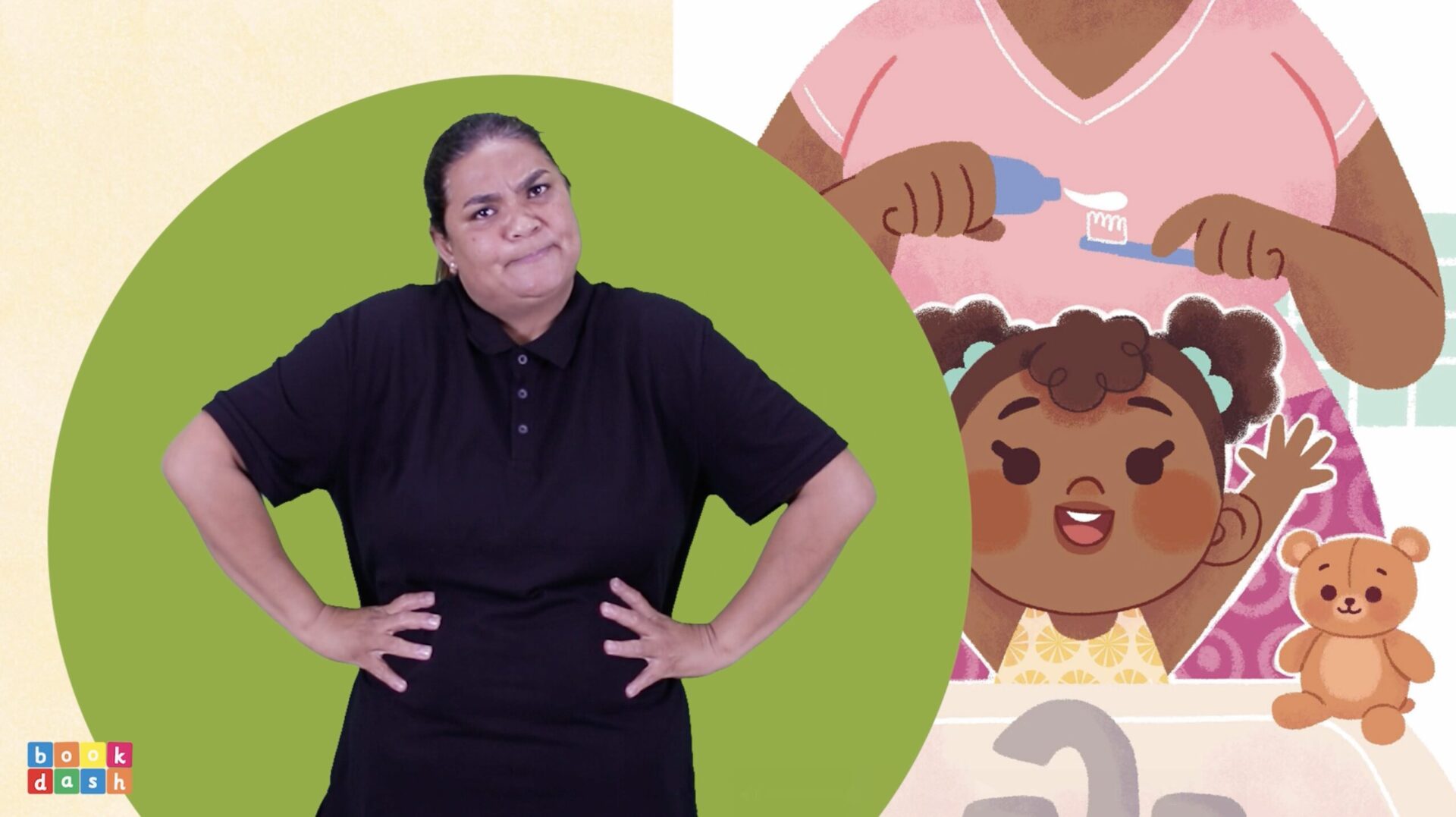
Deaf storytellers from around the country are signing each story on camera so children can experience books in their own language. This means that, for the first time, Deaf children will be able to explore the entire Book Dash collection through SASL as a complete library built with them in mind.
Handlab has long worked on developing learning materials for SASL Home Language, supporting schools for Deaf and Hard of Hearing learners across South Africa. What began as a small pilot translating a few stories has grown into a nationwide effort, especially after SASL was officially recognised in 2023.
Handlab made a conscious choice to involve Deaf storytellers from different provinces and backgrounds. Recording camps were held in Cape Town, Johannesburg and Durban, with 18 Deaf adults selected to take part.
“One of the biggest breakthroughs has been bringing storytellers together from across the country,” says Reyneke. “We now have a collection of rich, expressive videos that showcase the diversity of the Deaf community.”
Book Dash, whose mission centres on making books freely available to children, shares stories created by volunteers, allowing anyone to print or distribute them. Bringing those same stories into SASL helps extend that access to children who have traditionally been excluded from early literacy spaces.
Many Deaf children enter school without a strong language foundation, often because their families don’t yet sign. Early exposure to stories in SASL can help build vocabulary, confidence and connection early on. The videos also support caregivers, giving families a way to share stories together, even if they’re still learning sign language themselves.
Related Stories
 How Debate Is Helping Cape Town Youth Find Their Voice
 NSRI's Countrywide Splash of Drowning Prevention Awareness
So far, over 50 SASL story videos are already available online for free! More will be added as recording continues. You can find them all here.
“We hope this initiative helps shift the literacy landscape by ensuring that Deaf children are not excluded from the joyful, story-rich childhood that hearing children often take for granted,” says Reyneke.
 by
by