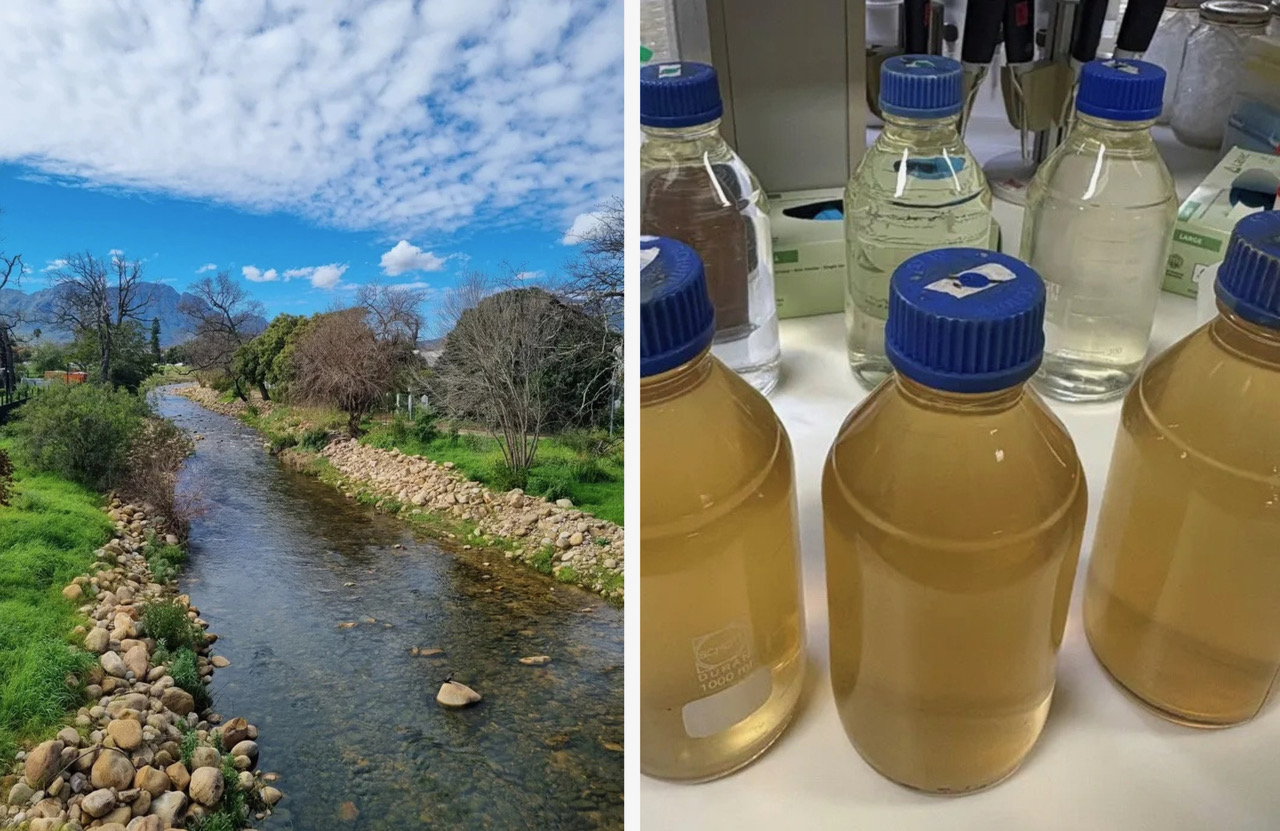
Fungal diseases affect more than 300 million people every year and are widely neglected. Stellenbosch researchers are looking for early warning signs in river water.
Stellenbosch, South Africa (02 November 2026) – Researchers at Stellenbosch University (SU) have found living, ‘medically important yeasts’ in the Eerste River. They now want to know whether changes in these organisms could help provide an early warning of rising infection risk.
Yeasts are single-celled fungi. Some can cause infections ranging from mild to life-threatening, mostly in people with weakened immune systems.
Dr Cleo Conacher, of SU’s Department of Microbiology, and her team began testing the river water in 2020. They found Candida albicans, which the World Health Organisation (WHO) classifies as a critical priority fungal pathogen. Two other yeasts they found, Nakaseomyces glabratus and Candida tropicalis, are classed as high priority.
The researchers were able to grow the yeasts as living cells from the river water. This gives them the opportunity to study how these yeasts behave and whether their time in the environment has changed how they respond to stresses linked to human health, including heat, human-like conditions and antifungal medicines.
Yeasts can adapt to changes in their environment over both the short and long term. When the same stresses occur repeatedly over many generations, genetic changes that help some cells survive become more common.
“Yeasts living together in nature are constantly sensing nutrients, chemical signals, other microorganisms and changes in their surroundings, and adjusting their metabolism in response. I became fascinated by the complexity of these internal sensing and response systems.” says Conacher, as per Stellenbosch University.
Some of the mechanisms that help yeast survive environmental stress can also help it survive inside the human body or withstand antifungal drugs.
Conacher is investigating whether measurable changes in river yeasts could signal rising risk to people and eventually be translated into practical early warning tools.
Surveys of communities living near the river found that children are the group most often in contact with the water. That affects where early warning tools would need to be deployed and who the warnings would need to reach.
Related Stories
 Erryn Finds a Friend and Musical Companion in His Guide Dog, Kylie
 The Gin Squad Drops 5 Tonnes of Pet Food on Tshwane SPCA!
The WHO estimates that fungal diseases affect more than 300 million people every year. Limited testing, unequal access to treatment and low awareness leave many infections undiagnosed or untreated in Africa.
Conacher is now working with engineers on a prototype device that would automatically collect river water samples and immediately analyse the biological data. The technology is still being developed. Her projects are funded by the Water Research Commission and Grand Challenges Africa.
To learn more, read the detailed report from Stellenbosch University here.
 by