After his lungs began to fail following a routine medical procedure, Gqeberha councillor Rano Kayser found himself in the fight of his life. Thanks to an extraordinary medical team and advanced ECMO treatment at Netcare Greenacres Hospital, he’s now looking forward to serving his community once again.
Gqeberha, South Africa (16 July 2026) – When Gqeberha councillor Rano Kayser arrived at Netcare Greenacres Hospital, his lungs were failing and time was running out. What followed was a remarkable fight for survival, driven by cutting-edge medicine, unwavering compassion and a determination that refused to let hope slip away.
After a routine procedure at another health facility, Mr Kayser aspirated stomach fluids, triggering severe infection and inflammation in his lungs. By the time he reached Netcare Greenacres Hospital, he was suffering from acute respiratory distress syndrome (ARDS), a life-threatening condition that had left his lungs so badly damaged they could no longer transfer enough oxygen into his bloodstream. Even with the highest level of oxygen a ventilator could provide, his condition continued to deteriorate.
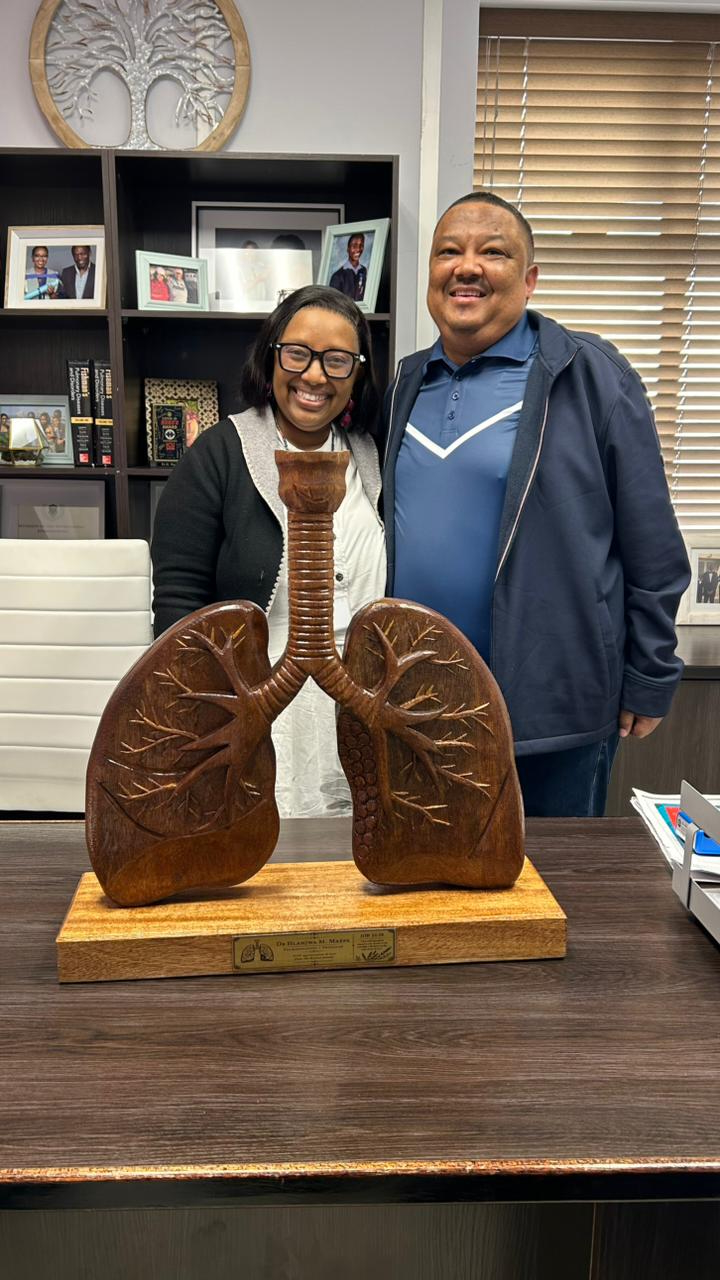
“When he came to us, Mr Kayser had severe infection and inflammation of his lungs after aspirating stomach fluids during a routine procedure elsewhere,” explains pulmonologist and critical care specialist Dr Hlanjwa Maepa.
With conventional treatment no longer enough, the multidisciplinary team made the decision to use extracorporeal membrane oxygenation, or ECMO, an advanced form of life support reserved for the most critical cases. The technology temporarily takes over the work of the lungs, oxygenating the blood outside the body and allowing damaged lungs the opportunity to rest and recover.
“ECMO is the last line of defence for respiratory failure, and Mr Kayser fit the clinical criteria. The X-rays revealed that the damage to his lungs was too significant for ventilation alone to be successful. ECMO is a bypass system offering the lungs a chance to rest and heal,” says Dr Maepa.
The treatment required an extraordinary level of teamwork. Cardiothoracic surgeons, intensive care specialists, pulmonologists, perfusionists and specially trained nursing staff all played a role in keeping Mr Kayser alive. For 11 days, ECMO-trained nurses remained at his bedside around the clock, constantly monitoring his condition, adjusting the system and responding to every change. While the medical team worked tirelessly, they also recognised the importance of the people waiting beyond the ICU doors. Mr Kayser’s family were encouraged to visit, bring photographs from home and surround him with reminders of the life he was fighting to return to.
“There was a time when Mr Kayser was semi-conscious, and even in this state of mind when his life was hanging in the balance, he was an absolute gentleman throughout. As an ICU team, we’re very protective of the people in our care, and often we have to protect our patients from the anxiety in their own minds. We talk to them, providing that reassurance, whether they are awake or not,” says Dr Maepa.
Then, after days of uncertainty, came the first signs of progress.
Mr Kayser’s lungs slowly began healing, allowing doctors to remove him from ECMO before gradually weaning him off the ventilator. Following several courses of antibiotics to overcome persistent lung infections, he reached a milestone that had once seemed impossible. On 31 March, after spending more than a month in intensive care, he was able to breathe on his own again.
Related Stories
 Saturday Good News Wrap Up: A Million Acts of Kindness and So Much to Celebrate!
 Cape Town Kayakers Rescue Starving African Penguin Far Out to Sea
That moment marked the beginning of a different kind of challenge.
Weeks in intensive care had taken a significant toll on his muscles, leaving him needing to rebuild his strength from scratch. Guided by physiotherapists and supported by the hospital team, he progressed from sitting up to standing, before eventually taking his first steps during the first week of April. His determination impressed everyone involved in his care, and before the end of the month he was well enough to transfer to a sub-acute rehabilitation facility to continue his recovery.
Looking back on the journey, Mr Kayser says his survival was made possible through faith and the dedication of the people who cared for him.
“It is the Grace of God that carried me through this. I want to thank Dr Maepa and all the doctors and staff at Netcare Greenacres Hospital; they were wonderful, and they gave me the willpower to go on. I’m so deeply thankful to be restored to my family and I’m looking forward to getting back to serving our community again soon.”
Thanks to an extraordinary team and an unwavering will to recover, Mr Kayser’s story is no longer one about failing lungs, but about hope restored and a future filled with possibility.
 by
by