When doctors discovered a giant tumour pressing against her brain, the urgency was immediate, the surgery complex, and the outcome dependent on skill, teamwork and resilience.
South Africa (24 January 2026) – Headaches are one of those things most of us brush off, especially when life is busy and responsibilities keep piling up. For 26-year-old Azola Mnotoza, they were just another inconvenience at first, something to manage while working as a registry clerk and planning the next chapter of her studies.
But what started as a seemingly ordinary symptom turned out to be a warning sign that would change her life and, ultimately, save it.
Everything shifted one morning when Azola’s mother went to wake her and immediately knew something was wrong. Azola was confused, drenched in sweat, struggling to speak and unable to lift her head. She was rushed to the emergency department at Netcare Unitas Hospital, where urgent scans revealed the cause: a large brain tumour that required immediate attention.
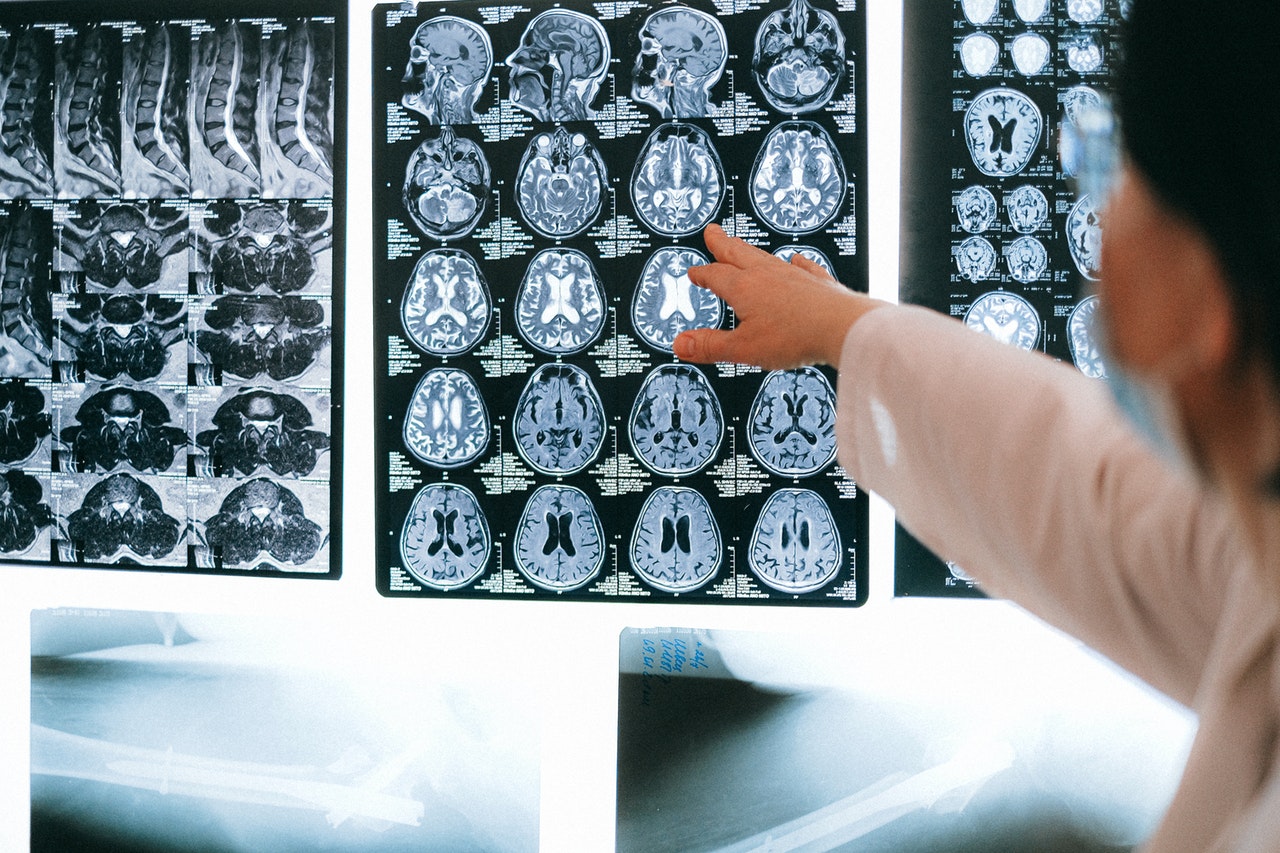
“Azola’s scan showed a giant meningioma, which is a tumour arising from the meninges, or membranes, that surround the brain,” explains Dr Jaffar Azhar, a neurosurgeon practising at Netcare Unitas Hospital.
“These tumours usually grow very slowly and are uncommon in someone so young. Although the tumour was benign, its size and location meant that it was high risk and surgery could not be delayed.”
Had it gone untreated, Dr Azhar says, Azola’s condition would have continued to deteriorate and could have taken a sudden, life-threatening turn. Looking back, Azola now recognises that the headaches she had experienced on and off for nearly two years were trying to tell her something more serious was going on.
“I had seen doctors and was given advice for the treatment of tension,” she says. “As a young, healthy person, a brain tumour was the last thing I expected. Hearing that news was frightening.”
Given the size of the meningioma and its benign nature, complete surgical removal was the only viable option.
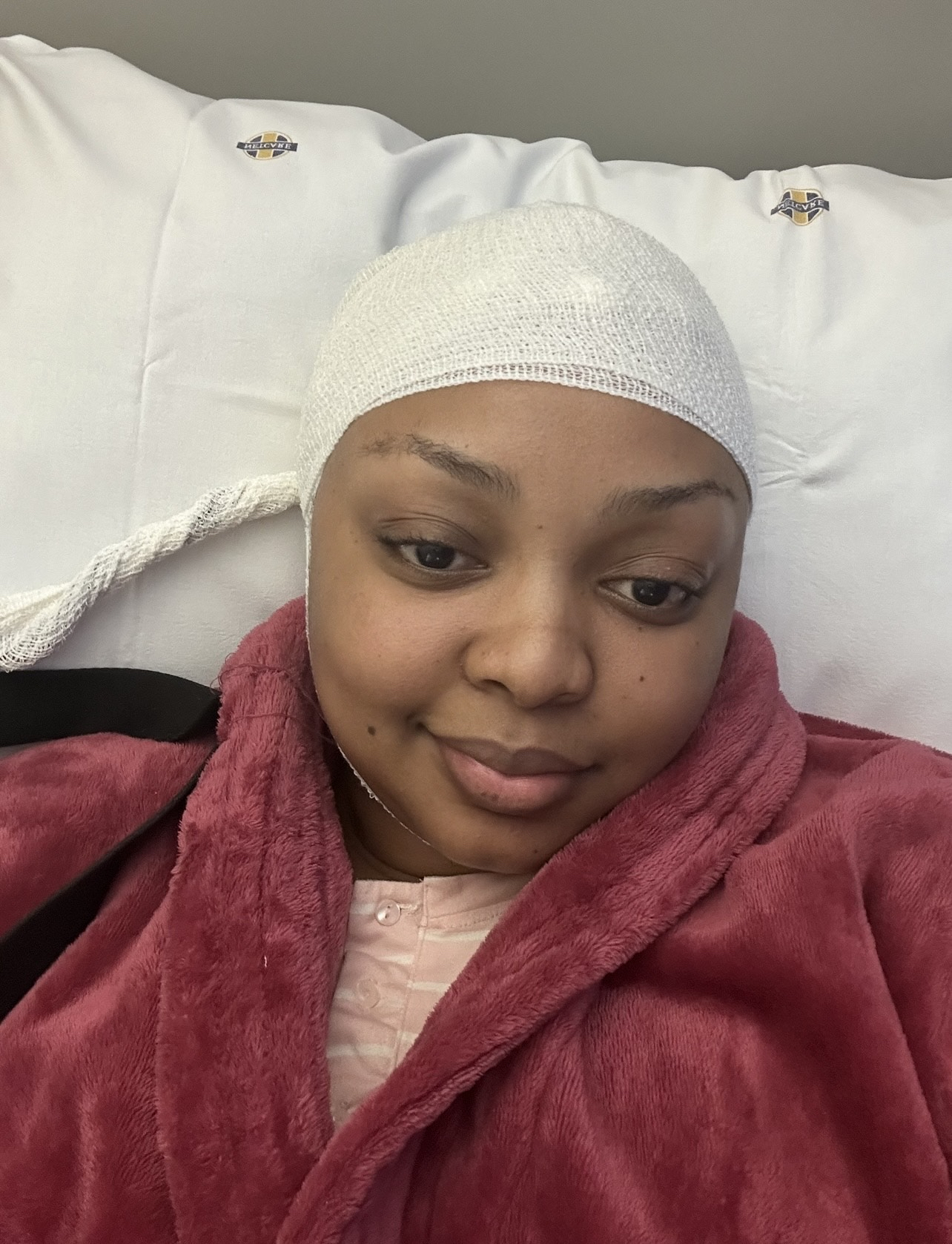
After close monitoring, Azola underwent a highly specialised neurosurgical procedure just a week after her admission. The operation took 10 hours and required extraordinary precision.
Related Stories
 Saints Hits R5 Million Mark for Giving Day!
 Historic Film Workshop Proves Deaf Talent Belongs Behind and in Front of the Camera
“During this lengthy procedure, we used a surgical microscope to illuminate and magnify the intricate structures of Azola’s brain, and an ultrasonic aspirator to break down and safely remove the tumour while protecting the surrounding brain tissue,” says Dr Azhar.
He adds that these tumours are often highly vascular, which can lead to significant blood loss.
“In this type of surgery, we frequently use a cell saver, a medical device that collects blood lost during surgery, then carefully filters and cleans it before transfusing it directly back to the patient to immediately replenish their own blood supply.”
But advanced technology and surgical skill are only part of the picture. According to Dr Azhar, successful outcomes depend on a deeply collaborative team effort.
“While Netcare Unitas Hospital is very well equipped for advanced neurosurgical procedures, our true strength lies in the expertise of the nursing and theatre teams. A ten-hour operation requires intense focus and close collaboration. From the operating theatre to intensive care and the recovery ward, we function as one cohesive unit with each member playing a vital role in delivering the best possible outcomes for our patients.”
After surgery, Azola spent several weeks recovering in hospital, followed by a demanding rehabilitation programme. Because the tumour was on the left side of her brain, she experienced confusion, speech difficulties and problems with walking, challenges that are not uncommon after major neurosurgery.
“When I woke up after the operation, I couldn’t talk properly and I couldn’t walk,” she recalls. “Everything had to be relearned step by step, and it’s taken a lot of rehabilitation – more than a year – to get to where I am now.”
Alongside the physical recovery, emotional support played a crucial role.
“Before the operation, I was given counselling at the hospital, which made a big difference. It helped prepare me mentally and process everything I was going through. The staff were so patient and kind, and Dr Azhar really helped me to understand the procedure and see a way forward when everything felt overwhelming.”
Today, Azola’s progress is remarkable. Each day brings new improvements as she rebuilds her strength, confidence and independence. She is hoping to return to work in February and is determined to continue her studies.
“I was studying towards a BA in Government, Administration and Development, and I would love to go back to university to complete my degree. Graduating is very important to me, and I have about two years to go.”
The things she loves most have also become part of her healing.
“I’ve always loved sport, especially netball and hockey. I’m a big reader too. My speech is still improving, but every step forward feels like a victory,” she says. “From Dr Azhar and the team at Netcare Unitas Hospital to my rehabilitation therapists, so many people have supported me on this journey, and I’m incredibly grateful.”
For Dr Azhar, cases like Azola’s reflect both the complexity of neurosurgical care and the extraordinary resilience of patients.
“Yes, these procedures are incredibly complex, but what truly moves me is the courage and determination of patients like Azola. Seeing her make a strong recovery after such a major operation is deeply rewarding. Her story is also a reminder that persistent neurological symptoms, even in young and healthy people, should never be ignored. Early diagnosis and access to specialised care can make a life-changing difference.”
From overlooked headaches to a marathon operation and a long road of rehabilitation, Azola’s journey is a powerful reminder of what is possible when expertise, teamwork and human resilience come together. She is not just recovering; she is reclaiming her future, one hard-won step at a time.

 by
by