From football and cricket to everyday movement, Chris Nicholson believes greater attention should be given to the non-dominant side.
South Africa (04 August 2026) – For most athletes, using a dominant hand or foot is second nature. A cricketer may throw with one hand, a footballer may favour one foot, and a tennis player may rely heavily on one side of the body when playing a shot.
But former cricketer and retired High Court judge Chris Nicholson believes that developing the non-dominant side could help athletes become more balanced, adaptable and creative.
His interest in the subject began during his own childhood. Nicholson played tennis and threw a ball with his right hand but batted left-handed in cricket. While his teachers questioned why he used different sides for different activities, he says it simply felt natural to him.
That early experience led him to ask whether athletes could improve their performance by training both sides of the body more equally.
“If you have two hands on a cricket bat or a golf club, one hand may be strong and skilled while the other is weaker and less developed. I began to wonder why we do not try to train both hands and, in sports such as football, both feet, to the same extent.”
The idea is not simply about becoming equally comfortable with both hands or feet. In his book, Double Your Sport Skill, Nicholson explores how developing the non-dominant side could influence not only physical performance but also the way athletes think, create and respond during competition.
“If we develop the left side, we may start accessing the creative side of the brain. We may have more creativity in our sport, more flair and more excitement.”
He believes this could be particularly valuable in sports where quick thinking and unpredictability can make a difference. An athlete who is able to pass, throw, kick or strike effectively from either side may have more options available and be more difficult for an opponent to read.
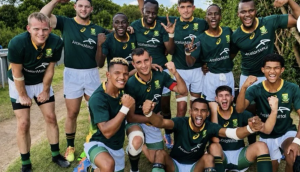
He points to football as an example. Some of the sport’s most celebrated players, including Lionel Messi and Diego Maradona, were known for their exceptional left-footed ability. However, he believes that players who can use both feet confidently may have an even greater advantage.
Related Stories
 Saturday Wrap Up: Finding the Good During a Difficult Week
 Herman High Learners Help Turn Hermanus Pink for Pauline!
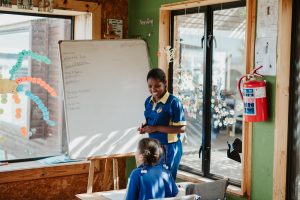
Nicholson’s interest also extends beyond elite sport. He believes that encouraging children to use both sides of their bodies from an early age could support better coordination, balance and overall development.
He referred to an experiment conducted in Stellenbosch in the 1940s, where a group of children spent a year completing activities with their non-dominant hands. The children were encouraged to use that hand for tasks such as throwing, writing and other physical exercises.
According to the findings Nicholson examined, the group showed improvements in academic performance, coordination and body balance.
“Their marks improved by 10%,” he said. “Their body posture was better because they did not have only one strong side. Their strength was more evenly developed.”
While further modern research would be needed to explore these findings in greater detail, Nicholson believes the experiment raises important questions about how children are taught to move and develop skills.
His message is not that athletes should abandon their dominant side. Instead, he argues that the less-used side should be given more attention.
“If children are going to throw with one hand, they should also learn to throw with the other. If they are kicking a ball, they should practise with each foot so that both sides of the body can develop.”
Developing both sides may encourage greater adaptability and creativity while helping people become more physically balanced.
“You may develop a Pelé-type soccer player. But you may also unlock creativity and potential in ways we do not yet fully understand.”
 by
by