Death is inevitable, but the confusion, conflict and financial pressure that follow don’t have to be. A new index explores how prepared South African families really are.
South Africa (01 September 2026) – Death is a touchy subject in most families, something nobody wants to talk about, and yet, it is such a certainty. It’s just the when and the how that leaves us guessing. And that is the thing: the guesswork can be so much worse if families are left unprepared.
Capital Legacy has been determined to help South Africans navigate the whirlwind that is the passing of a loved one. They have done the hard work and the research so we don’t have to… And it turns out, we are sorely underprepared.
Capital Legacy have launched the country’s first national benchmark tracking how prepared, protected and supported South African families really are once a loved one dies. The result is a little alarming, but knowing where we change comes with the chance to be more prepared.
Most South Africans will have a funeral policy or an equivalent to cover the costs that come with death, but beyond that, we are a little less covered. When the paperwork, the legal processes and cash-flow pressure build; when the family tension grows (and it almost always does) and when months threaten to turn to years, how do families cope?
Capital Legacy commissioned South Africa’s first Estate Readiness Index™ (ERI) to find out just how families cope financially, emotionally and administratively after losing a loved one. They plan to make the report an annual benchmark to measure these things going forward.
“We measure many aspects of financial wellbeing in South Africa, but until now there has not been a national benchmark for what happens to families after losing a loved one,” says Craig Harding, CEO of Capital Legacy.
“That matters, because you cannot improve what you do not measure. The new Estate Readiness Index™ gives us a way to understand the pressures families face, track whether preparedness improves over time, and apply those insights to making the experience easier for those left behind.”
For 2026, we scored a 50/100. Market research was conducted among 1,000 South Africans aged 25 to 75 who had lost a loved one in the preceding five years.
That score is made up of three supporting scores. They are as follows:
Related Stories
 Dr Khathu Sebola's Survival Became Her Calling, Now She Helps Heal Others
 1 Million Good Things Before Christmas! South Africa, Are You In?
Personal Preparedness Health Score: 48/100
Reflects the deceased loved one’s preparedness, including the estate-planning and financial provisions in place and whether there was sufficient cash to cover the legal fees of winding up the estate.
Household Impact Health Score: 51/100
Reflects the financial and practical impact of the death on the household, including financial pressure, how long it took to recover financially, and the level of disruption and emotional strain experienced.
Process Friction Health Score: 52/100
Reflects the experience of navigating estate administration, including administrative pressure, the gap between expected and actual estate timelines and the service experience during the process.
Additionally, the broader research report draws on three evidence streams: New national consumer research, Capital Legacy estate administration data and publicly available data related to deceased estates. These provide additional context and insights into estate readiness in South Africa, beyond the Index itself.
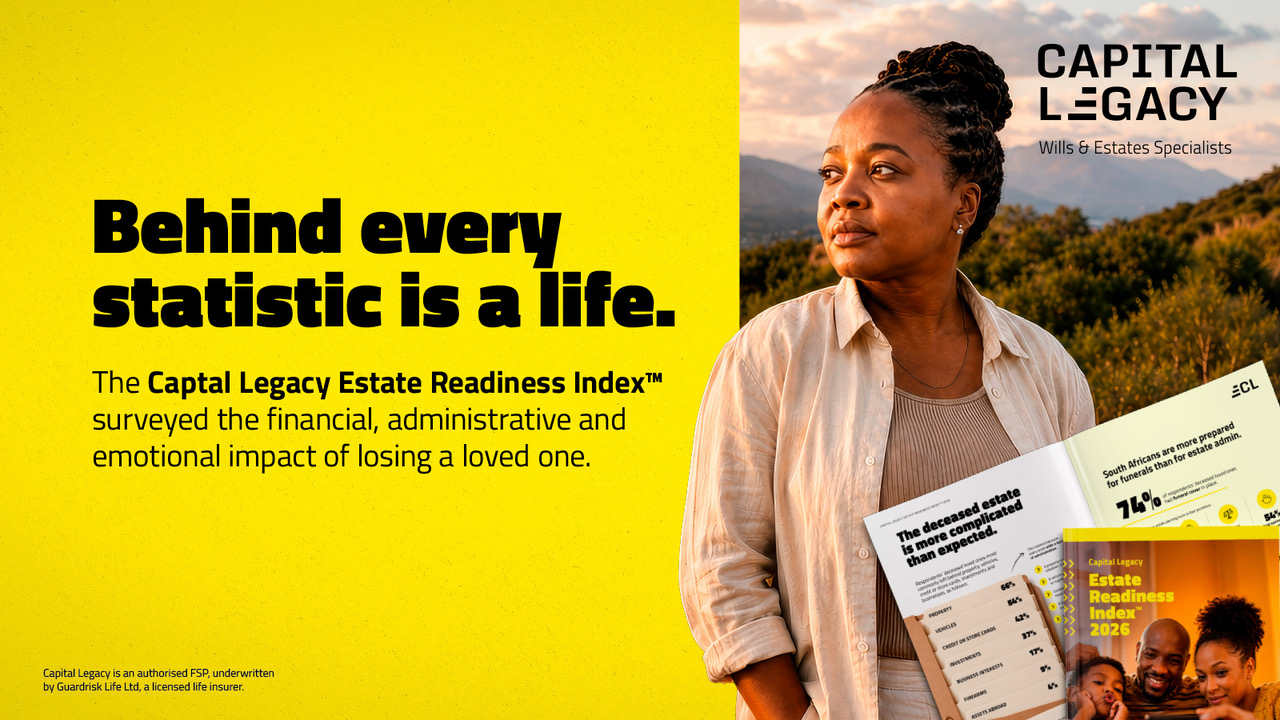
Many of the research respondents reported feeling financial pressure after the death in the family. Within three months, 66% experienced cash shortages. Over half expected the estate to be wound up within 6 months, but only 28% of them actually achieved that. 42% of the respondents experienced family conflict, and 60% of the families felt emotional strain that affected their daily lives.
These statistics matter because they are the first of their kind in South Africa. Understanding what South Africans go through during a bereavement is the first step. With a better understanding, South Africans can better cope with the hardest parts of losing a loved one.
For Capital Legacy, the Index also builds on a much longer-term mission to get South Africans thinking beyond funerals, to consider what their families will really face after they’re gone.
“For years, our campaigns have challenged South Africans to think differently about wills, estate planning and the cost of dying. This research takes that conversation further,” says Grant Fietze, Head of Marketing at Capital Legacy.
“It gives families, financial advisers and the fiduciary profession a shared evidence base for understanding what really happens after a death, and what can ultimately be done to reduce pressure on the people we love.”
And yes, while the ERI is useful for financial guidance, it is so much more personal than that.
“Estate planning is often spoken about as a legal or financial task. This research shows it is much more personal than that,” says Deenisha Nadesan, Managing Director of Fiduciary Services at Capital Legacy.
“It is about the family who needs cash before estate funds are available. The parent who has not nominated preferred guardians. The child whose inheritance needs to be protected. The spouse who is grieving while trying to find documents, answer questions and keep a household going. This gives us a clearer view of those realities so that, together, we can do better.”
And 2026 is only the beginning. Capital Legacy will publish the Estate Readiness Index™ annually to track whether South Africans are becoming more prepared, less exposed and better supported after a death in the family, with further findings from the research to be released in the months ahead.
And all this, just in time for Wills Month, when South Africans will be called to start thinking about the future and planning to protect the people they love most. As Capital Legacy always says: Death is inevitable. Confusion, conflict and financial pressure do not have to be.

 by
by