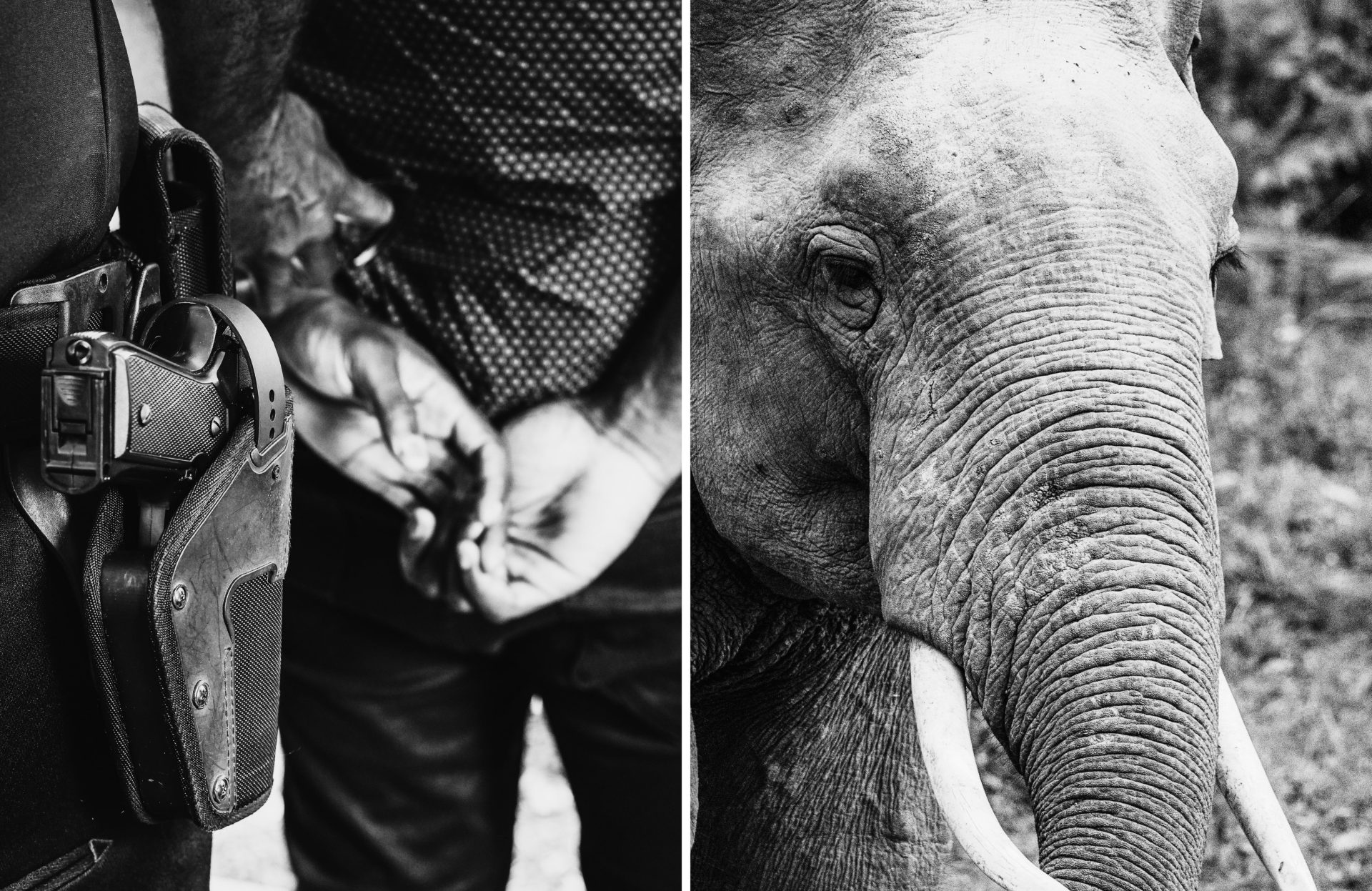
Four suspected wildlife traffickers have been arrested and more than 130 kilograms of ivory seized in Nigeria, marking another significant victory in the fight against the illegal wildlife trade and offering hope for elephants across Africa.
Nigeria (16 June 2026) – Every elephant tusk tells a story. Sadly, too often that story ends with the loss of one of the world’s most magnificent animals. That is why news like this matters, not just in Nigeria where the arrests took place, but right here in South Africa too.
Four suspected wildlife traffickers have been arrested in Nigeria following a major intelligence-led operation that resulted in the seizure of more than 130 kilograms of ivory, dealing another significant blow to the illegal wildlife trade.
On the 13th of June 2026, the Nigeria Customs Service (NCS) and the National Environmental Standards and Regulations Enforcement Agency (NESREA), supported by intelligence from the Wildlife Justice Commission, carried out coordinated operations in Ogun State and Lagos. The operation led to the arrest of four suspects and the seizure of 22 elephant tusks weighing a combined 130.84 kilograms.
While the arrests happened hundreds of kilometres from South Africa, the victory is one worth celebrating across the continent. Wildlife trafficking does not recognise borders. Criminal networks move ivory, rhino horn, pangolin scales and other illegally traded wildlife products through complex international routes, often linking multiple African countries before the products eventually reach overseas markets. South Africa knows this challenge all too well. Our elephants, rhinos and countless other species remain under constant threat from organised criminal syndicates that view wildlife as a commodity rather than a living part of Africa’s natural heritage. What makes this latest operation particularly encouraging is that it was not simply about intercepting a shipment. Investigators spent months gathering intelligence and building a case against a high-level figure within the illegal ivory trade. According to the Wildlife Justice Commission, the suspect had extensive connections within trafficking networks and access to significant quantities of ivory, making the arrest a potentially major disruption to criminal operations.
“Wildlife Justice commends NCS and NESREA for their commitment, and continued leadership in combatting organised wildlife crime,” said Olivia Swaak-Goldman, Executive Director of the Wildlife Justice Commission.
“Over the past five years, sustained intelligence-led operations and coordinated law enforcement action have transformed the wildlife trafficking landscape in Nigeria. Traffickers who once operated with relative impunity are now facing a very different reality. Many have been arrested, forced to relocate, or significantly altered their operating methods in response to enforcement pressure.”
“This operation demonstrates the power of strong partnerships, intelligence-led enforcement, and the commitment of the Nigerian authorities to tackling organised wildlife crime. By systematically identifying and targeting key actors within trafficking networks, Nigeria is showing that it is possible to disrupt criminal operations, increase the risks for traffickers, and make wildlife crime an increasingly difficult and unsustainable business.”
Conservation is not only happening in game reserves, national parks and wildlife rehabilitation centres. It is also happening in intelligence units, courtrooms, customs offices and cross-border investigations where dedicated people are working to dismantle the criminal enterprises driving poaching and trafficking. The results from these partnerships are already impressive. Since 2021, operations conducted with the Nigeria Customs Service have led to the arrest of 48 wildlife traffickers, the seizure of nearly 1.2 tonnes of ivory and more than 25 tonnes of pangolin scales. Sixteen convictions have also been secured, sending a clear message that wildlife crime carries real consequences.
Sustained enforcement pressure is making it increasingly difficult for traffickers to operate. Authorities say criminal networks are becoming more reluctant to hold large stockpiles of wildlife products and are often forced to move smaller quantities, reducing profits and increasing risks. In simple terms, the business model is becoming harder to sustain.
Related Stories
 Hennops Coughs Up Giant Shoe and a Bigger Question
 Shandor Larenty Earns International Humanitarian Award
For animal lovers, conservationists and anyone who believes Africa’s wildlife should still be here for future generations, that is genuinely good news.
Across Africa, the people fighting for our wildlife are making life harder for traffickers and creating a safer future for the animals that share this continent with us.
 by
by