A future where both people and sharks can coexist and thrive together. That’s the bold goal of a newly launched “Shark Smart” exhibit in Durban, uniting conservationists and experts to champion non-lethal solutions for shark safety.
Durban, South Africa (29 July 2025) – While sharks often strike fear into most hearts, these vital marine creatures, like all ocean life, desperately need our protection and thoughtful management.
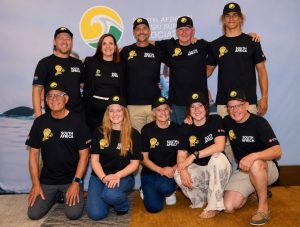
Last week at the Ushaka Marine World Aquarium, a groundbreaking initiative took a bold step in rethinking the safety of both people and sharks, as various stakeholders, scientists and ocean advocates came together for the official launch of the exhibition: Shark Smart: How Do We Keep Sharks & People Safe?
Hosted by conservation NGO, WILDTRUST, in partnership with a formidable lineup of organisations, including the Shark Conservation Fund, the South African Association for Marine Biological Research (SAAMBR), the Oceanographic Research Institute (ORI), SharkSafe Barrier, Shark Spotters, Justice4Jaws and the Sharks & People Working Group, the exhibition focused on non-lethal alternatives to shark risk mitigation – reinforcing the crucial message that all marine life matters.
Spotlighting Innovative Solutions
Guests were taken on an immersive journey through the history of shark nets and drumlines in KwaZulu-Natal, the ecological costs of current practices, and the innovative technologies and solutions being developed both locally and globally to reduce harm to marine life.
Some of the alternatives featured include sonar systems, artificial intelligence software, the Shark Shield, multispectral drones, and the SharkSafe Barrier, with a spotlight also placed on personal bather responsibility when choosing to enter the sharks’ home.
“This exhibition is a result of over a year of dedication; a true labour of love,” says Lauren van Nijkerk, WILDTRUST’s Director of Campaigns.
“All stakeholders were meaningfully included in shaping the plan, key messages, and overall vision. We focused on presenting both existing shark risk mitigation methods and potential non-lethal alternatives in engaging, educational, and interactive ways, making sure most of the materials are in both English and isiZulu.”
Maryke Musson, Executive Manager of Conservation Education and Communications at SAAMBR, shared that the aquarium offered a rare and powerful opportunity to exhibit and open minds to the wonders of the ocean, especially for those who have never seen it before.
“Our team enjoyed the challenge of putting together this exhibit, and looks forward to the next phases, building on this initial foundation and seeing the impact that it creates.”
 Terrifying Hijacking Hits Germiston Bedfordview SPCA – South Africa Can Help!
 The Extraordinary Journey and Emotional Reunion of Yo-Yo the Frenchie!
Understanding KZN’s Shark Nets and Finding a Way Forward
KwaZulu-Natal currently operates 13km of shark nets and 177 drumlines across 37 beaches, which is a system that is still widely misunderstood. Contrary to popular belief, these nets are not physical barriers that prevent sharks from reaching swimmers. Instead, they are designed to catch and kill specific shark species deemed a risk to bathers.
The shark nets are set in staggered rows 300-500m offshore and parallel to the shore with gaps between and below them. Sharks can therefore swim under, around and between them to reach the surf zone.
Despite South Africa’s rich ocean diversity, only three shark species are primarily associated with unprovoked incidents: the Zambezi (bull) shark, white shark, and tiger shark. These are the sole targets of the current “bather safety gear.” However, the environmental cost is significant. On average, more than 400 non-target marine animals, including dolphins, rays, turtles, and Critically Endangered sharks, are killed in the nets each year as bycatch.
With the “bather safety nets” being highly ineffective, drumlines were introduced in 2005 as a more targeted form of fishing. These are baited hooks suspended from an anchored float, targeting large sharks to reduce bycatch.
South Africa holds a proud legacy in shark conservation, having become the first country in the world to legally protect the white shark in 1991, setting a global gold standard for chondrichthyan conservation. Chondrichthyans, which include sharks, rays, skates, and chimaeras, are ancient creatures that have changed remarkably little over 400 million years.
View this post on Instagram
With more than 1,250 species globally, ranging from the tiny 10cm finless sleeper ray to the 18m whale shark, these animals are among the most functionally diverse on Earth. Each species plays a unique role in maintaining the balance and health of marine ecosystems.
Despite their value, over one-third of all shark and ray species worldwide are now threatened with extinction, primarily due to overfishing and habitat loss. These species are especially vulnerable because they grow slowly, mature late, and produce few offspring.
“We were the first country to protect the white shark and now, more than ever, South Africa has the opportunity and responsibility to lead once again in shark and ray conservation,” says WILDTRUST’s Senior Scientist, Dr Jennifer Olbers.
“However, our laws are outdated, shark populations globally are under pressure, and two species – the largetooth and green sawfish – have already been categorised as locally extinct.”
This exhibition marks the first phase of an awareness campaign dedicated to redefining bather safety not through killing sharks, but through education, innovation, and coexistence. The future of ocean safety must consider both people and the planet.
The exhibition is currently open to the public at the uShaka Marine World Aquarium.
Sources: Supplied
Don’t ever miss the Good Things. Download the Good Things Guy App now on Apple or Google.
Do you have something to add to this story? Please share it in the comments or follow GoodThingsGuy on Facebook & Twitter to keep up to date with good news as it happens, or share your good news with us by clicking here or click the link below to listen to the Good Things Guy Podcast with Brent Lindeque – South Africa’s very own Good Things Guy. He’s on a mission to change what the world pays attention to, and he truly believes there’s good news around us. In the Good Things Guy podcast, you’ll meet these everyday heroes & hear their incredible stories:
Or watch an episode of Good Things TV below, a show created to offer South Africans balance in a world with what feels like constant bad news. We’re here to remind you that there are still so many good things happening in South Africa & we’ll leave you feeling a little more proudly South African.
 by
by