By debunking the myth that African genetics are too complex for stem cell matches, new research shows that saving lives is simply a matter of growing and diversifying the registry to one million donors.
South Africa (17 July 2026) – For years, Black South African patients with blood cancer or blood disorders searching for a stem cell donor were told the odds were not in their favour.
Their ancestry, the thinking went, carried too much genetic diversity for a donor search to reliably succeed, shares Palesa Mokomele, Head of Community Engagement and Communication at DKMS Africa.
However, New research published in Blood Global Haematology says otherwise. The genetics, it turns out, are not the problem. What stands between many Black patients and a lifesaving transplant is the registry, and who is on it.
Researchers looked at the HLA profiles (the genetic markers doctors use to match donors and patients) of nearly 57,000 South Africans across all four of the country’s major population groups.
They ran the math on what would happen if the registry grew to a healthy size, and the results were eye-opening. If the registry had 1 million donors from the same community, a Black South African patient would have an 80% chance of finding a perfect match and a White South African patient would have an 81% chance.
“The genetics, it turns out, are not the problem. What stands between many Black patients and a lifesaving transplant is the registry, and who is on it,” says.
If the donors exist, the matches will too. It is just the registry that does not reflect the country it serves, and that gap is costing lives. Part of this is because donor drives tend to go where it is easiest to, and the communities hardest to reach are left out.
Mokomele says the research findings revealed large areas of the country where Black African donor representation is almost absent. Entire provinces contribute too few donors for researchers to meaningfully analyse matching patterns. Of the fifteen subpopulations large enough to analyse by language and province, seven were White communities.
Interestingly, the study found that the two least genetically diverse groups were Afrikaans-speaking White people in Mpumalanga and isiXhosa-speaking Black Africans in the Western Cape. Because people within these communities share so many genetic similarities, every new donor who signs up has an incredibly high chance of saving a life.
Related Stories
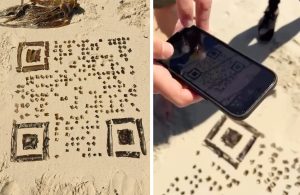
 Genius Seaweed QR Code on Cape Town Beach Helps Save a Species!
 Charity Golf Day Raises R600,000 for Table Mountain's Volunteer Heroes!
The good news is that things are finally moving in the right direction. Today, 56% of new registry sign-ups are people of colour.
But there is still a massive mountain to climb. Right now, the entire registry sits at just 200,000 donors across all population groups. The ultimate goal? Reaching a million Black African donors alone.
The Human Cost
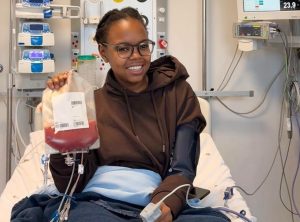
Consider what that means for a patient like Sbahle, a six-year-old girl diagnosed with aplastic anaemia before she could pronounce the word. She has spent four years, most of her life, waiting for a donor. She is stable, back at school, and still without a match.
“Not long ago, a family in her position would have been told the odds were against them, and there was little to be done. We know better now,” says Mokomele.
For a patient still waiting, the donor who could save them may already be out there, alive, healthy, and simply not on the registry.
Not Everyone’s Odds Are the Same
Mokomele stresses that the progress is not uniform. Coloured and Indian/Asian South Africans face a harder search: their greater genetic diversity means common profiles cover far less of the group, around 21% for Coloured patients, and full matches are rarer.
The outlook is not bleak. In a registry of 100,000 donors from their own group, a Coloured patient has roughly a 51% chance of a nine-out-of-ten match and 92% of an eight-out-of-ten.
Advances in transplant medicine are also shifting what a near-match means in practice. Recent research has shown that post-transplantation cyclophosphamide, a drug used to prevent graft-versus-host disease, significantly reduces the impact of donor mismatches, to the point where a single mismatch may be clinically negligible.
For Coloured and Indian/Asian patients who cannot find a full match, that development changes the calculation considerably.
From Research to Reality
This research also points to where investment should go.
“The biggest gains will not come from a new algorithm or a better search tool. They will come from signing up donors in the communities the registry has missed. That is slow, expensive, deeply unfashionable work, and it is the thing that actually gets a patient to a transplant.”
Recruitment has to reach into Limpopo, KwaZulu-Natal, the Eastern Cape, the Northern Cape and the rural areas with no donor base at all, and it has to be permanent, not a run of once-off drives.
“Science has now answered one of the biggest questions in stem cell transplantation,” Mokomele says.
“Black South Africans are not inherently harder to match. The challenge is building a registry that reflects the country itself. Every new donor brings that goal, and patients like Sbahle closer.”
 by