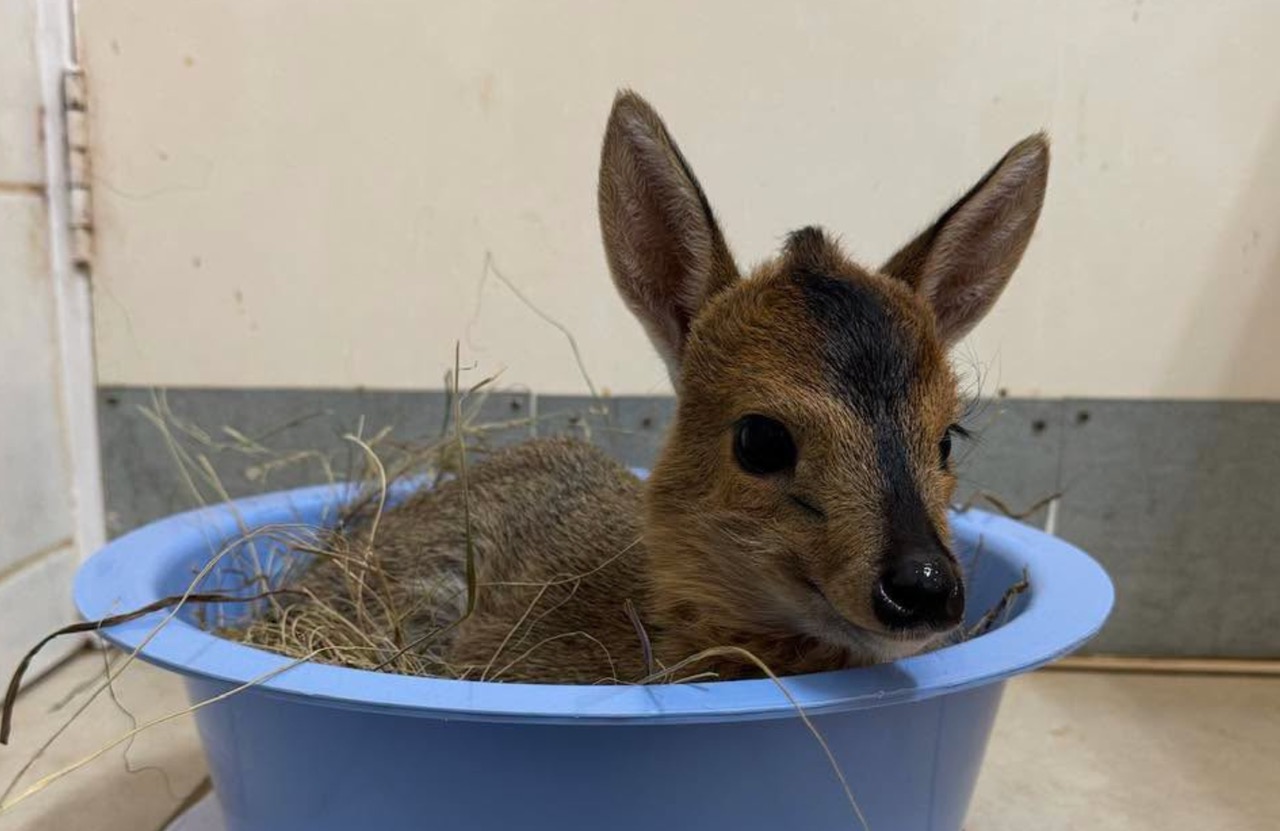
Cutest thing you’ll see this week? A bokkie in a bowl. Cleverest thing you’ll learn? How to weigh one!
KwaZulu-Natal, South Africa (30 July 2026) – Before we get to the ‘science’, let’s all take a moment to appreciate the pure joy of this tiny bokkie peacefully loafing out in a bowl…
But because we’re always happy to learn something new about South Africa’s incredible wildlife, we’ll gladly take the excuse to share this ridiculously adorable moment from the team at FreeMe Wildlife.
As it turns out, weighing a baby duiker isn’t quite as simple as placing it on a scale. The wildlife rehabilitation team gives us a glimpse at how it’s done, explaining that every step is a careful one to keep the little antelope safe, comfortable and healthy.
“Step 1: Place the scale on a flat surface… on the ground.
Why? Baby duikers are surprisingly quick! If she suddenly wakes up and decides to jump, she’s only stepping out of the bowl instead of falling from a height.
Step 2: Place a bowl lined with soft hay on the scale and zero (tare) it.
Why the bowl? It keeps her snug and comfortable, allowing her legs to stay tucked underneath her, just as they would naturally.
Why the hay? It creates a soft, familiar surface and prevents her from slipping while she’s being weighed.
Related Stories
Step 3: Gently lift her into the bowl, keeping her curled-up sleeping position if she’ll allow it.
Step 4: Wait for the reading to settle and record her weight.
Step 5: Gently return her to her warm sleeping spot.”
 Two Rescued Doelings Find a Happy New Friendship at Joburg SPCA
 Celebrating Barbara’s 18 Years of Service, Leadership and a Lot of Happy Tails!
FreeMe explains that daily monitoring of the bokkie’s weight is an important part of raising a healthy little duiker.
“By weighing her at the same time every day, before she’s had any milk, we get the most accurate measurement. Tracking her weight tells us whether she’s growing properly, receiving enough nutrition, and developing as she should. Sometimes, the scales are the very first indicator that something isn’t quite right. It’s a process that takes just a few minutes, but those few minutes provide invaluable information for raising a healthy little duiker.”
Did you know that duikers are among Africa’s smallest antelope? They’re known for being shy, quiet animals that usually prefer to keep to themselves. South Africa is home to three species, including the grey (or common) duiker, the red duiker and the tiny blue duiker, which is the smallest antelope found in southern Africa. Most duikers feed on leaves, flowers and fallen fruit, playing an important role in forest and bushveld ecosystems by helping disperse seeds.
As for this little grey duiker, every weigh-in helps FreeMe Wildlife ensure she’s growing exactly as she should before one day returning to the wild where she belongs!
FreeMe rescues, rehabilitates and releases injured and orphaned indigenous wildlife with the goal of giving every animal the best possible chance of returning to a natural life in the wild. The team admits more than 2000 wildlife patients each year while following a strict rehabilitation approach that allows animals to retain their natural instincts and avoid becoming dependent on people.
 by
by